

Dr. Egon Dejonckheere
Egon does research in Emotion, Clinical Psychology and Abnormal Psychology. His most recent publication is 'The Bipolarity of Affect and Depressive Symptoms', featured in Journal of Personality and Social Psychology: Personality Processes and Individual Differences.




What are Ecological Momentary Interventions?
The defining feature of an EMI is that support is delivered in the contexts where it can actually be used. Someone experiencing stress may learn breathing exercises in a counselling session, and a patient dealing with cravings may discuss coping strategies in the therapy room. EMIs move these skills beyond those artificial settings by prompting people to practise and apply them in the flow of their everyday lives, to maximize their impact.
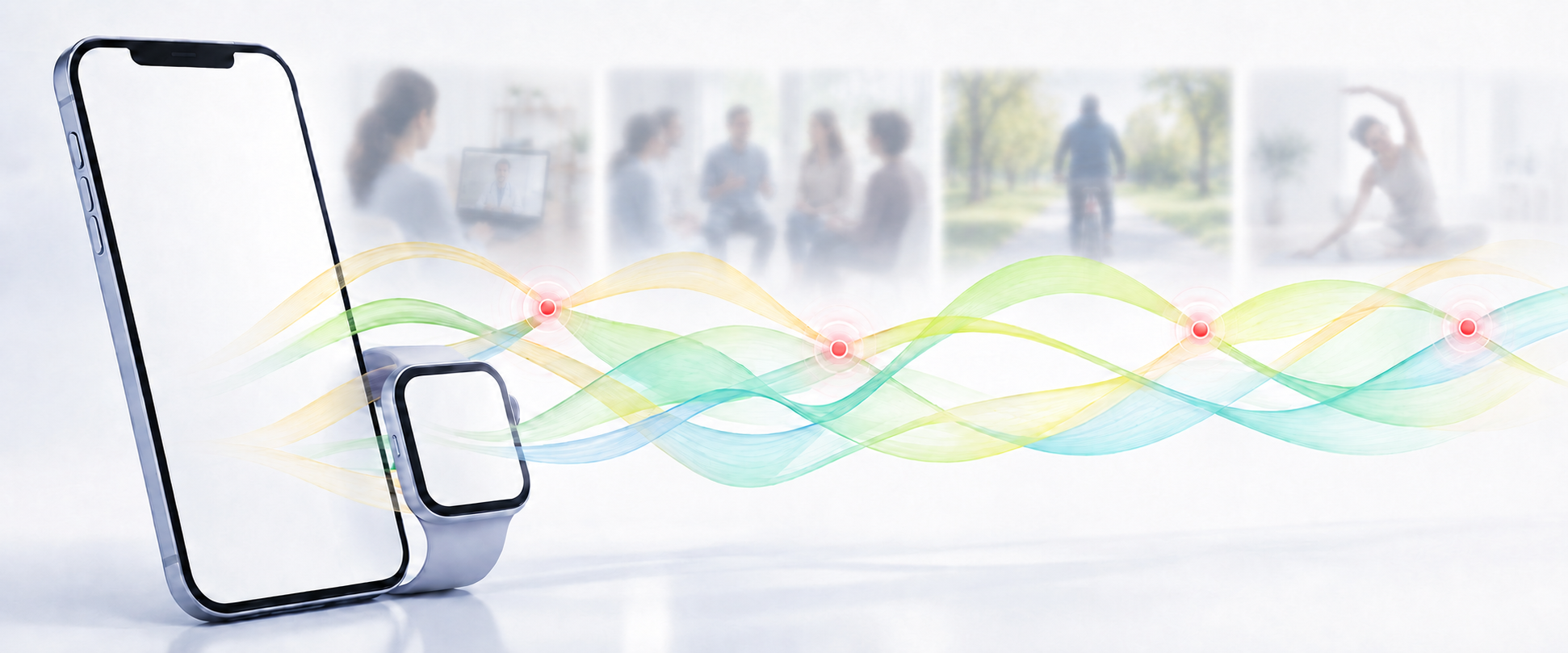
In this sense, EMIs extend the logic of Ecological Momentary Assessment (EMA) and Experience Sampling Methodology (ESM). EMA and ESM measure thoughts, feelings, symptoms, behaviors, and contexts as they occur in daily life. EMI uses those same everyday moments as opportunities for intervention. EMIs can function either as stand-alone interventions or as supplements to existing treatment (blended care).
EMIs are widely used in behavioral medicine and mental health research. Their design draws on clinical psychology, behavioral science, ambulatory assessment, mobile health (mHealth) and human-computer interaction.
How EMI builds on EMA and ESM
Traditional interventions often struggle to reach these moments. A person may learn a coping strategy in therapy, but fail to remember or apply it when symptoms peak. A participant may intend to change a behavior, but needs support at moments when the behavior is most likely to occur. EMI addresses this gap by bringing intervention into daily life.
Ecological Momentary Assessment (EMA) and Experience Sampling Methodology (ESM) make this possible by repeatedly sampling people’s experiences in context. These methods reduce reliance on retrospective recall, increase ecological validity, and make it possible to examine temporal relations between variables in daily life.
In an EMI design, information collected through EMA or ESM can be used to guide what happens next. A momentary report of low mood may trigger a behavioral activation prompt. A report of high anxiety may trigger a relaxation exercise. A pattern of repeated stress may trigger feedback, reflection, or additional support.
How EMIs decide when to intervene
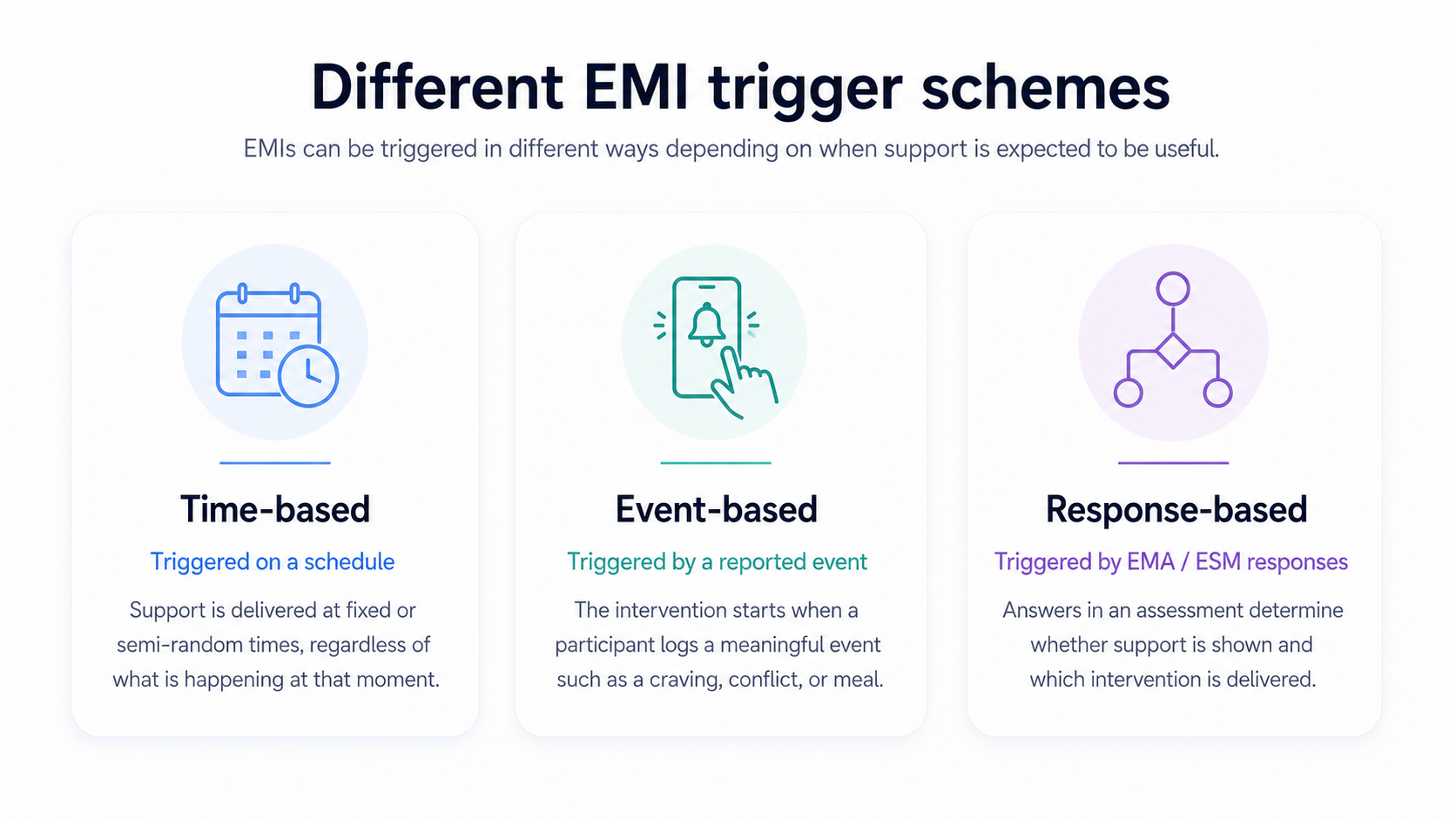
Time-based interventions
This approach is relatively simple to implement and can work well when the intervention is not tied to a highly specific moment. For example, a participant may receive a daily self-compassion exercise, a medication reminder, or a short psycho-educational message.
However, time-based EMIs may miss the moments when support is most needed. A coping prompt may arrive when the participant is not distressed, while no support may be delivered during a high-risk moment. This can introduce annoyance and intervention dissatisfaction.
Event-based inteventions
Event-based EMI is useful when the goal is to intervene around a clearly identifiable behavior or experience. For example, in eating disorder research, interventions may be linked to meals, urges, or binge-eating risk. In couple studies, participants may request an empathy exercise every time they are involved in a fight or dispute.
The main downside of event-based EMIs is that they require active participant input. Participants need to notice the relevant event, remember to open the app, and be willing to report it at the moment it occurs. As a result, event-based EMI designs may miss important episodes when participants forget, avoid reporting, or feel too overwhelmed to engage.
Response-based interventions
This approach creates a direct link between measurement and intervention. It allows researchers to move from asking “What is happening right now?” to asking “What support is appropriate right now?”
Technically, this is often implemented through conditional logic or branching. A participant’s answer determines what happens next: which follow-up questions appear, whether an intervention is triggered, and which intervention module is shown. For example, a stress rating above a predefined threshold may activate a relaxation exercise, whereas a low stress rating may simply end the survey.
The advantage of response-based EMI is that intervention delivery can be tailored without requiring participants to actively request support. The challenge is that the ESM or EMA protocol may be too burdensome and that the decision rules for intervention are not carefully designed. If thresholds are too sensitive, participants may receive unnecessary interventions. If they are too strict, important moments may be missed.
From EMI to Just-in-Time Adaptive Intervention
In many EMI designs, the moment of intervention is explicit. A participant reports high stress, logs a craving, indicates that a meal has started, or answers a self-report survey in a way that triggers a specific intervention. The system responds to information the participant has actively provided.
More adaptive designs go one step further. Instead of waiting for the participant to declare a need for support, the system may use passive sensing, wearable data, or previous response patterns to estimate whether a relevant moment is occurring. For example, changes in location, physical activity, sleep, phone use, heart rate, or earlier response patterns may suggest that someone is entering a context associated with increased vulnerability.
This is the point where EMI starts to narrow down to JITAI. While EMI refers broadly to interventions delivered in daily life, JITAIs focus more specifically on adapting support over time based on changing information about the person and their context. In other words, many JITAIs can be seen as a more adaptive form of EMI.
This does not mean that every EMI study needs to become a JITAI. Time-based, event-based, and response-based EMIs can be highly appropriate when the relevant moment is easy to schedule or easy for participants to report. More adaptive systems may increase relevance, but they also add complexity. Read our separate JITAI guide to learn more about these adaptive designs, or explore our detailed comparison page on the key differences between EMIs, JITAIs, and stand-alone mobile self-help interventions.
The core components of an EMI design
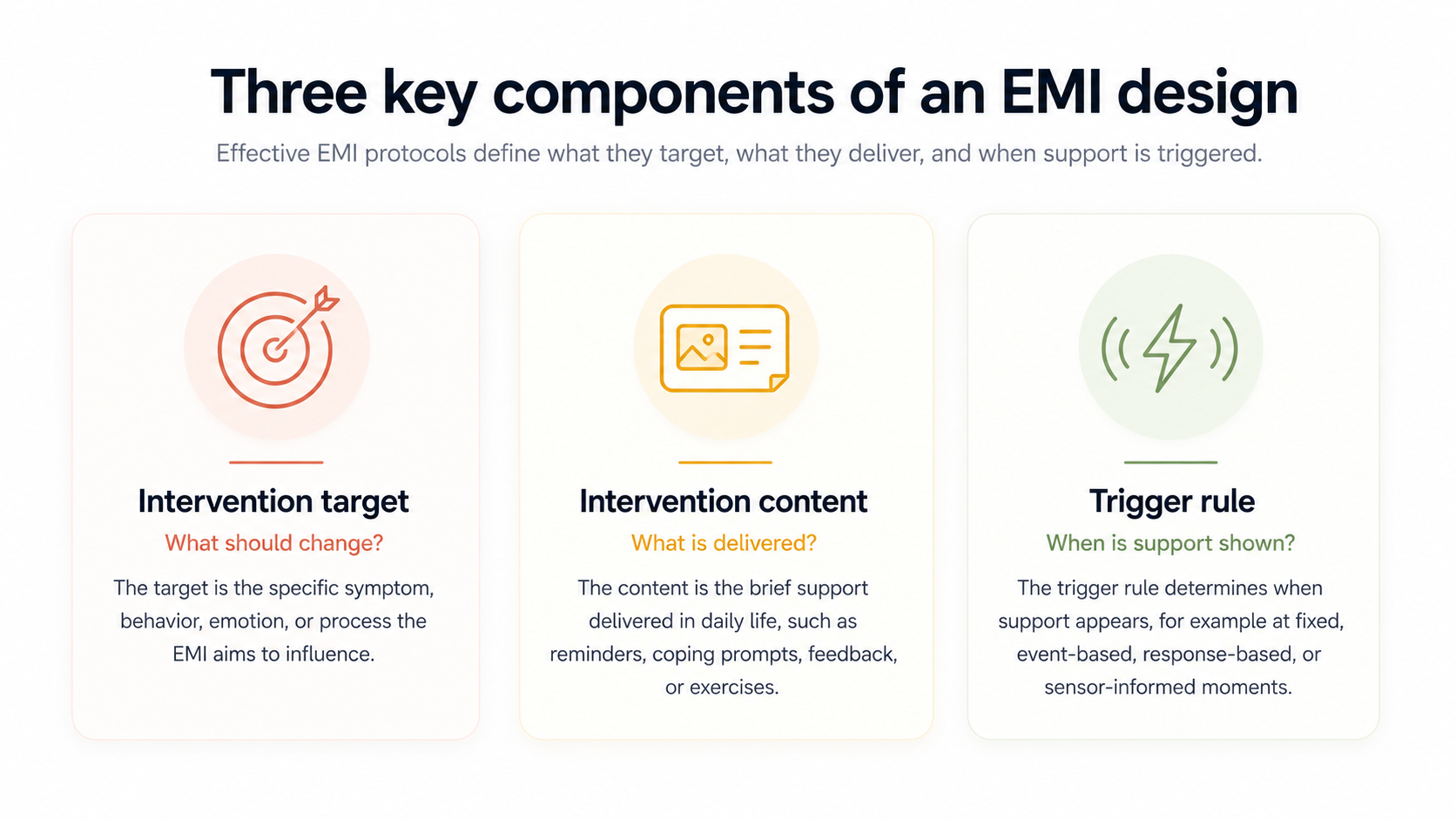
Intervention target
Intervention content
Researchers should also consider how this content is delivered. A short text message, push notification, audio exercise, interactive feedback screen, or visual summary may each affect engagement and impact differently, even when they are based on the same therapeutic principle.
In EMI, both the content and its delivery mode need to fit into daily life. EMI is not simply therapy transferred onto a smartphone. Instead, therapeutic principles must be broken down into small, usable intervention components that participants can engage with in real-world contexts, often within a few minutes.
Trigger rule
The trigger rule should match the intervention target. If the goal is to support medication adherence, fixed timing may be sufficient. If the goal is to reduce stress reactivity, response-based or event-based timing may be more appropriate. If the goal is to intervene before a high-risk behavior, more adaptive or sensor-informed timing may be needed.
Potential challenges of EMI designs
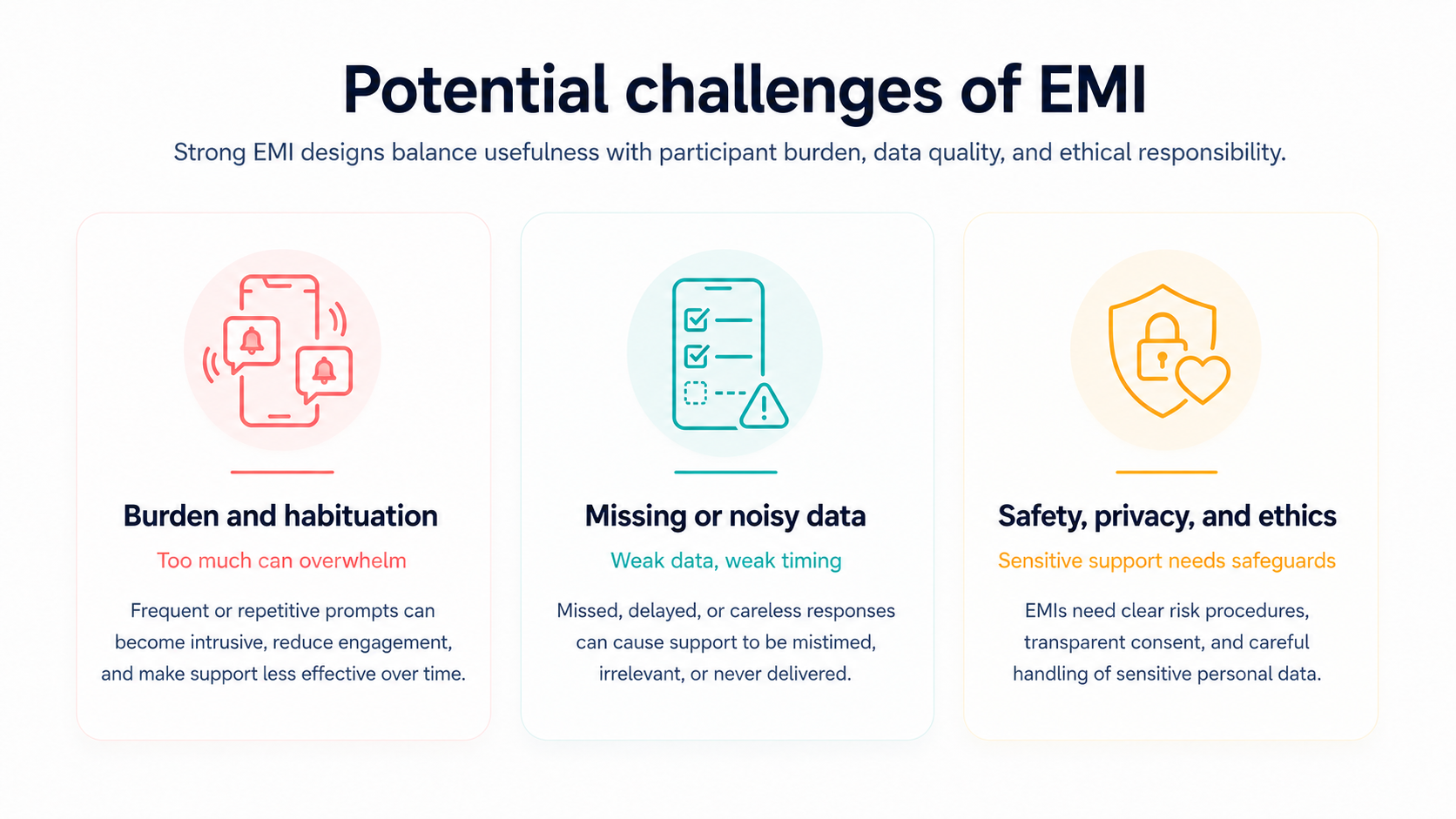
Burden and habituation
This creates a central design tension. More frequent intervention may increase the chance of reaching relevant moments, but it may also increase annoyance, disengagement, and missing data. A good EMI design is one that delivers enough support to be useful without overwhelming the participant.
Repetition can also reduce impact over time. If participants repeatedly receive the same message, especially when it is not tailored to their current situation, they may stop paying attention. EMI content therefore needs to be brief and recognizable, but also sufficiently varied and relevant to remain useful.
Missing, noisy, or incomplete data
For example, if a participant does not complete a stress assessment, a relevant coping exercise may never be triggered. If they respond much later, the intervention may be delivered after the critical moment has passed. And if repeated measurement changes how participants interpret or answer items over time, the trigger rules linked to those responses may become less accurate.
In response-based EMI, measurement and intervention are tightly connected, so weaknesses in the assessment process can directly translate into mistimed, irrelevant, or missed support.
Safety, privacy, and ethical considerations
Transparency is especially important. EMI should not create the impression of continuous clinical monitoring unless such monitoring is actually in place. Participants need to understand what the system does and does not do, and what happens when high-risk responses are reported.
Privacy is another central concern. EMIs may collect sensitive data about emotions, symptoms, behavior, physical and social context, or daily routines. When these data are used to guide interventions, participants should understand what is collected, how it is used, and what triggers support.
Ethical EMI design therefore requires data minimization, secure storage, transparent consent, and careful consideration of how much contextual information is truly necessary.
Evaluating the effectiveness of EMI
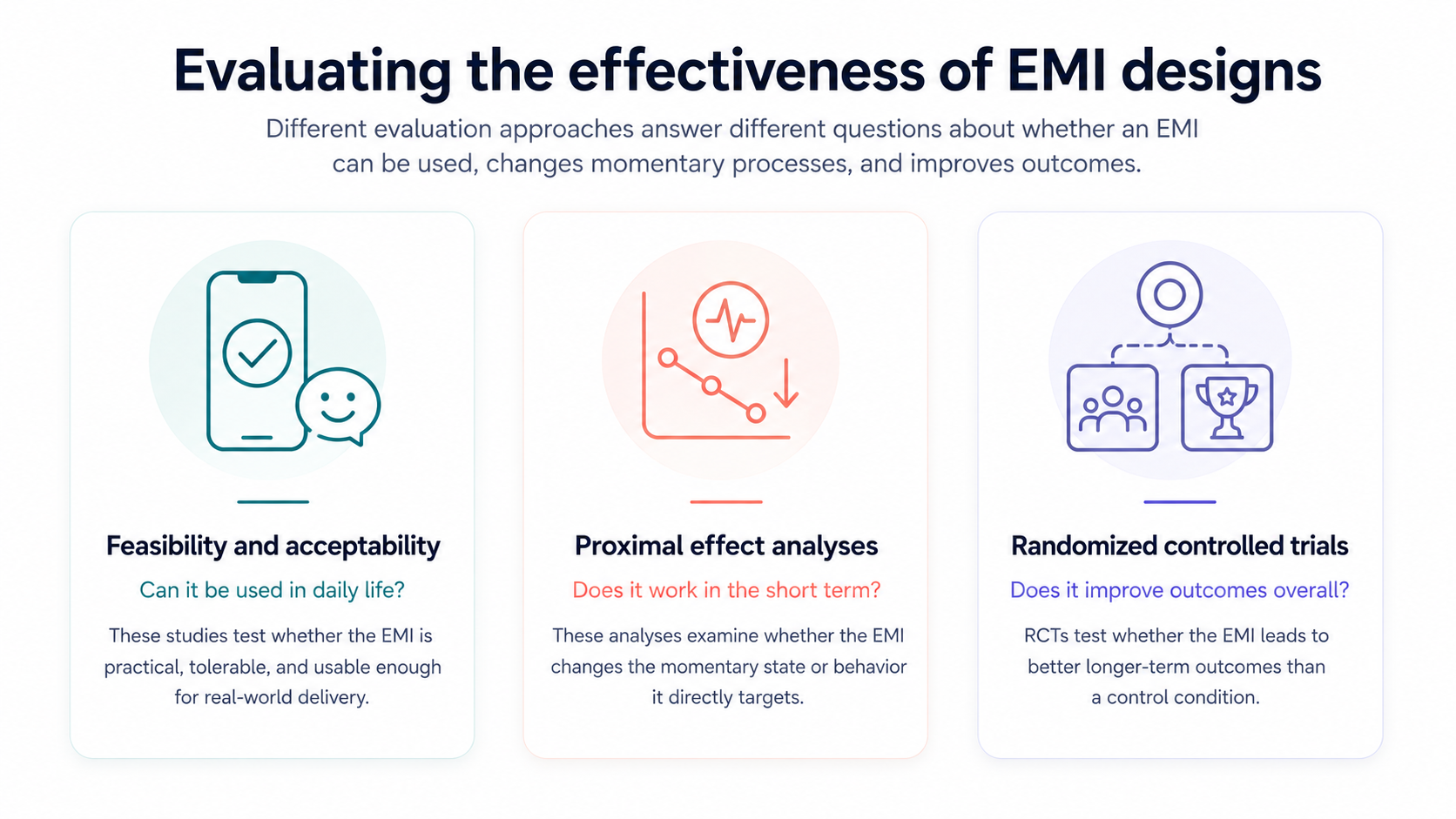
Feasibility and acceptability studies
Acceptability studies examine whether participants perceive the EMI as useful, tolerable, relevant, and appropriate. This includes whether the timing feels reasonable, whether the content is helpful, and whether the intervention fits into everyday routines.
Together, feasibility and acceptability studies can establish whether an EMI is usable enough to justify larger-scale testing. They are especially important because even a theoretically strong EMI may fail if participants find it too burdensome, if prompts arrive at inconvenient moments, or if the technology does not work reliably.
However, feasibility and acceptability studies cannot establish whether the EMI is effective. High engagement or positive user feedback does not necessarily mean that the intervention changes symptoms, behaviors, or mechanisms. These studies mainly answer the question: Can this EMI be delivered and used in daily life?
Proximal effect analyses
These analyses are important because EMIs are often designed to workthrough repeated small effects on momentary mechanisms. Proximal effect analyses can show whether the intervention changes the process it targets, and whether effects differ by context, timing, momentary state, or prior engagement.
However, proximal effects do not automatically imply long-term effectiveness. An EMI may reduce stress in the next 30 minutes without producing sustained symptom improvement. Conversely, a long-term effect may emerge through mechanisms that are not fully captured by the selected proximal outcomes. These analyses mainly answer the question: Does the EMI change the momentary process it is designed to influence?
Randomized controlled trials
RCTs are important because they can establish whether the EMI as a whole produces benefits beyond comparison conditions, such asassessment-only designs, usual care, waitlist control, or another active intervention. They are therefore especially useful when the goal is to evaluate overall intervention effectiveness.
However, traditional RCTs provide limited insight into how the EMI works moment by moment. They may show that the intervention improves outcomes, but not whether specific prompts were effective, whether timing mattered, or which components drove change.
Roots and history of EMI
This shift was captured in early work by Kristin Heron and Joshua Smyth, who helped define EMI as interventions delivered through mobile technologies in everyday life. Their work positioned EMI not as a separate tradition, but as a natural extension of ambulatory self-report: from repeatedly asking “what is happening right now?” to providing support when and where it may be needed.
EMI also built on longstanding clinical practice, where patients are often encouraged to practice skills between sessions. In Cognitive Behavioral Therapy (CBT), for example, homework, behavioral experiments, exposure exercises, and skills practice are central. Mobile technology made it possible to deliver this support in a more structured, timely, and scalable way.
Early EMI studies used palmtops, text messaging, mobile phones, and other portable technologies to deliver interventions. Smartphone apps expanded what EMIs could do, and made it easier to combine assessment, feedback, multimedia content, reminders, and interactive intervention components.
Sensors and wearables introduced the possibility of detecting behavioror context passively. More recently, EMI research has increasingly overlapped with Just-in-time Adaptive Intervention (JITAI) research, where interventions are adapted dynamically using decision rules and incoming data. As such, the field is moving from simple mobile prompts toward more personalized, context-sensitive, and adaptive intervention systems.
Dr. Egon Dejonckheere
Egon Dejonckheere is an Assistant Professor at Tilburg University, affiliated with KU Leuven, specializing in ambulatory assessment and intensive longitudinal research. His work combines methodological innovation to improve these methods with applications in mental health and emotion dynamics, and includes dozens of smartphone-based studies in daily life.


FAQ
01.
An Ecological Momentary Intervention, or EMI, is an intervention delivered in real-time and in people’s everyday lives. EMIs use mobile technology to provide support such as coping strategies, feedback, reminders, or brief therapeutic exercises in the contexts where symptoms, behaviors, or challenges occur.
02.
Ecological Momentary Assessment (EMA) measures experiences, behaviors, and contexts in daily life. Ecological Momentary Intervention (EMI) delivers support in daily life. In many studies, EMA responses are used to decide when or what type of EMI should be delivered.
03.
EMI is a broad term for interventions delivered in daily life. A Just-in-Time Adaptive Intervention (JITAI) is a more adaptive form of EMI that uses incoming data and decision rules to decide when, whether, and how to intervene. Not every EMI is a JITAI, but many JITAIs can be understood as adaptive, context-sensitive EMIs.
04.
Common types of EMI include time-based interventions, event-based interventions, and response-based interventions. Time-based EMIs are delivered according to a schedule. Event-based EMIs are triggered by participant-reported events. Response-based EMIs are triggered by answers in EMA or ESM surveys.
05.
Key challenges include participant burden, habituation, missing data, poorly timed prompts, noisy data, privacy concerns, and safety procedures for high-risk states. EMI design must balance relevance and intensity without overwhelming participants.
06.
EMIs can be evaluated through feasibility studies, acceptability studies, proximal effect analyses, and randomized controlled trials. Feasibility and acceptability studies assess whether the EMI can be deliveredand used. Proximal effect analyses test short-term changes. RCTs evaluate longer-term effectiveness.