

Dr. Egon Dejonckheere
Dr. Egon Dejonckheere is an Assistant Professor at Tilburg University, affiliated with KU Leuven, specializing in ambulatory assessment and intensive longitudinal research. His work combines methodological innovation to improve these methods with applications in mental health and emotion dynamics, and includes dozens of smartphone-based studies in daily life.




Choosing a sampling scheme in ESM or EMA
The choice matters because different schedules give you access to different parts of daily life. As such, the same momentary survey may answer different research questions depending on when it is administered.
This guide compares the main ESM and EMA sampling schemes and explains their practical and analytical trade-offs. The best choice depends on the process you want to understand, how quickly it changes, and what participants can realistically complete.
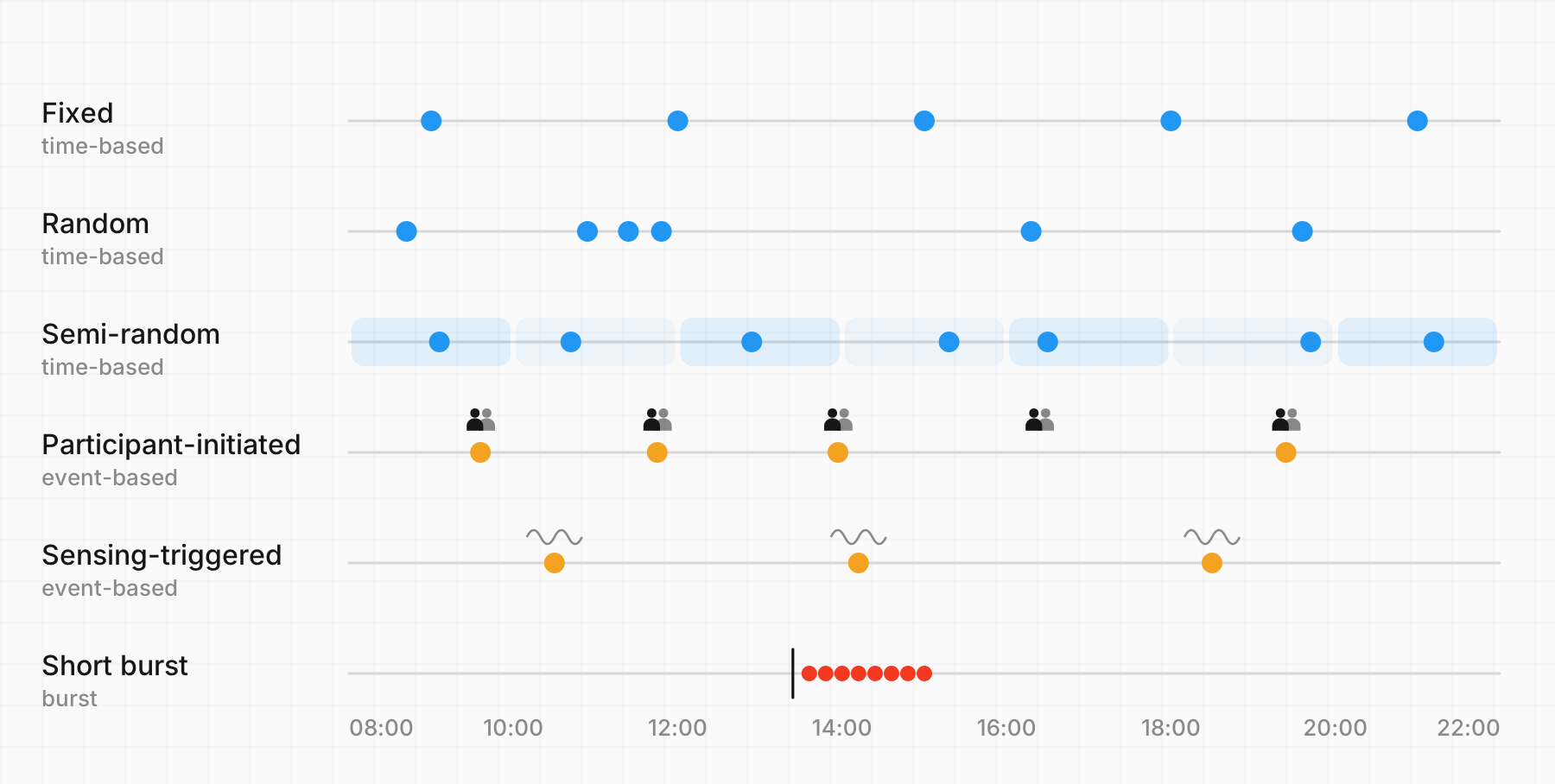
What is a sampling scheme?
Defining a sampling scheme in ESM or EMA is structured around three design decisions.
- A trigger: What initiates an assessment? A time rule, a participant action, or a detected event?
- The frequency: How many assessments are planned, or how many eligible events do you aim to sample?
- The study structure: Are assessments collected evenly over consecutive days, or structured in sequences around certain events?
Time-based sampling
The timing can be fixed, random, or semi-random.
Fixed sampling
For example, a workplace study may compare concentration at 10:00 and 15:00 throughout two working weeks. Those two moments have a clear meaning within the research question.
Advantages
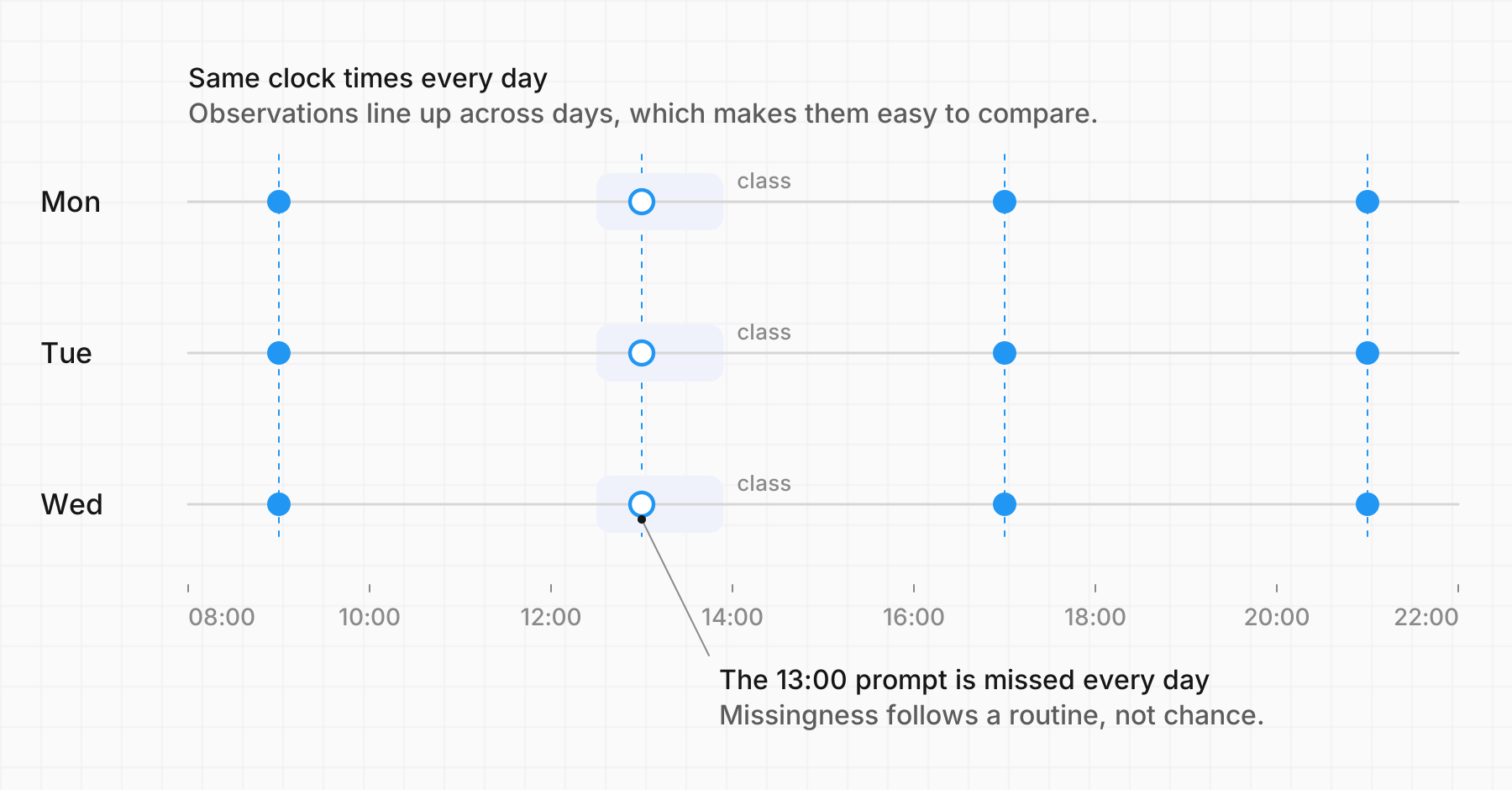
Repeatedly assessing participants at the same times also facilitates comparisons across days because observations are aligned to the same points in the daily cycle. This can be especially useful when the research question in ESM or EMA concerns systematic diurnal patterns, such as differences between morning, afternoon, and evening experiences.
When prompts are equally spaced, fixed sampling also produces observations with a consistent time lag, which can be advantageous for statistical models that rely on lagged associations. In practice, however, the actual interval between observations may still slightly vary because ESM or EMA participants do not always respond immediately, prompts may be missed, and the overnight interval is typically much longer than within-day intervals.
Disadvantages
Fixed schedules can also produce systematic selection or sampling biases in the situations that are observed. Because the same times are sampled repeatedly, the ESM or EMA design may disproportionately capture recurring routines while underrepresenting experiences that occur at other or less predictable moments. For example, a prompt scheduled every day around lunch time may repeatedly assess similar eating, work, or social contexts.
The same issue applies to nonresponse: if an ESM or EMA participant has a recurring class, meeting, commute, or caregiving obligation at a scheduled assessment time, missingness may become systematically associated with particular contexts rather than occurring at random. This can bias your conclusions. As a result, fixed sampling is less well suited when the primary aim is to obtain a broadly representative sample of experiences across the full range of everyday situations.
When to use
Fixed sampling is also appropriate when researchers want all participants to be assessed according to the same temporal structure, and when the impact of potential measurement interference is not of great concern. Before choosing this scheme, make sure that the selected assessment times correspond to the moments that are most relevant to the research question.
Random sampling
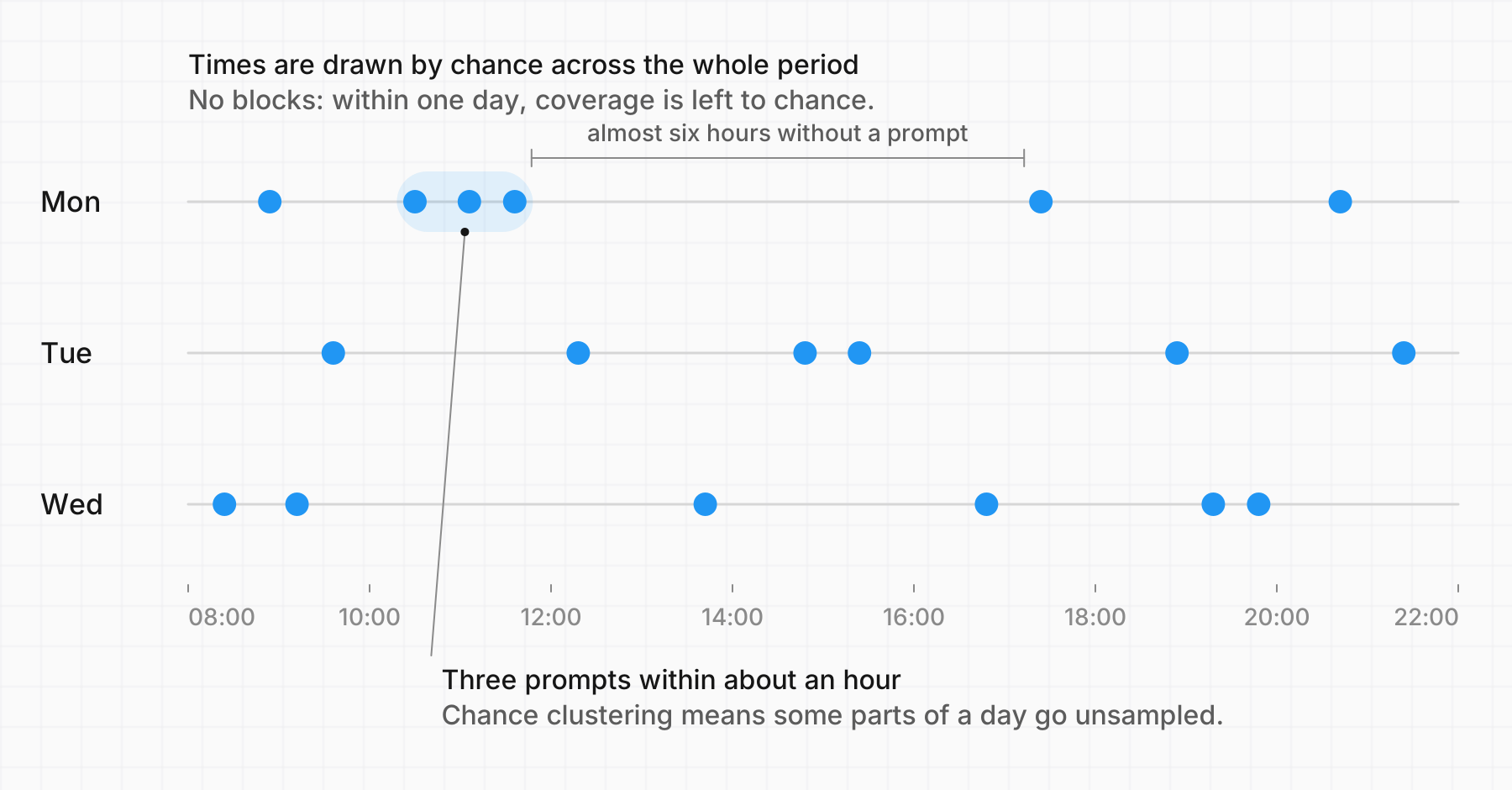
For example, an app could independently draw six survey times uniformly between 08:00 and 22:00 each day. Assessments are scheduled across the full eligible waking period without first dividing that period into smaller blocks.
Advantages
When assessment times are drawn uniformly from the eligible period, each eligible moment has the same probability of being selected. This can help avoid systematically prioritizing particular times of the day. Across a sufficiently large number of observations, random sampling can therefore provide broad coverage of participants' daily experiences.
Disadvantages
The unpredictability of prompts may also make assessments more disruptive or difficult to accommodate than a predictable schedule. In addition, the time intervals between consecutive observations vary, which needs to be accounted for when examining temporal or lagged relations.
Random sampling also does not guarantee that all relevant situations will be observed. Rare or short-lived events can still occur entirely between prompts. Moreover, completed observations may still become selective if participants are systematically less likely to respond in certain situations.
When to use
In practice, this is a relatively specific use case in ESM or EMA research, where researchers often want to ensure that assessments are distributed across different parts of the day. In those cases, semi-random sampling is typically the more appropriate choice.
Semi-random sampling
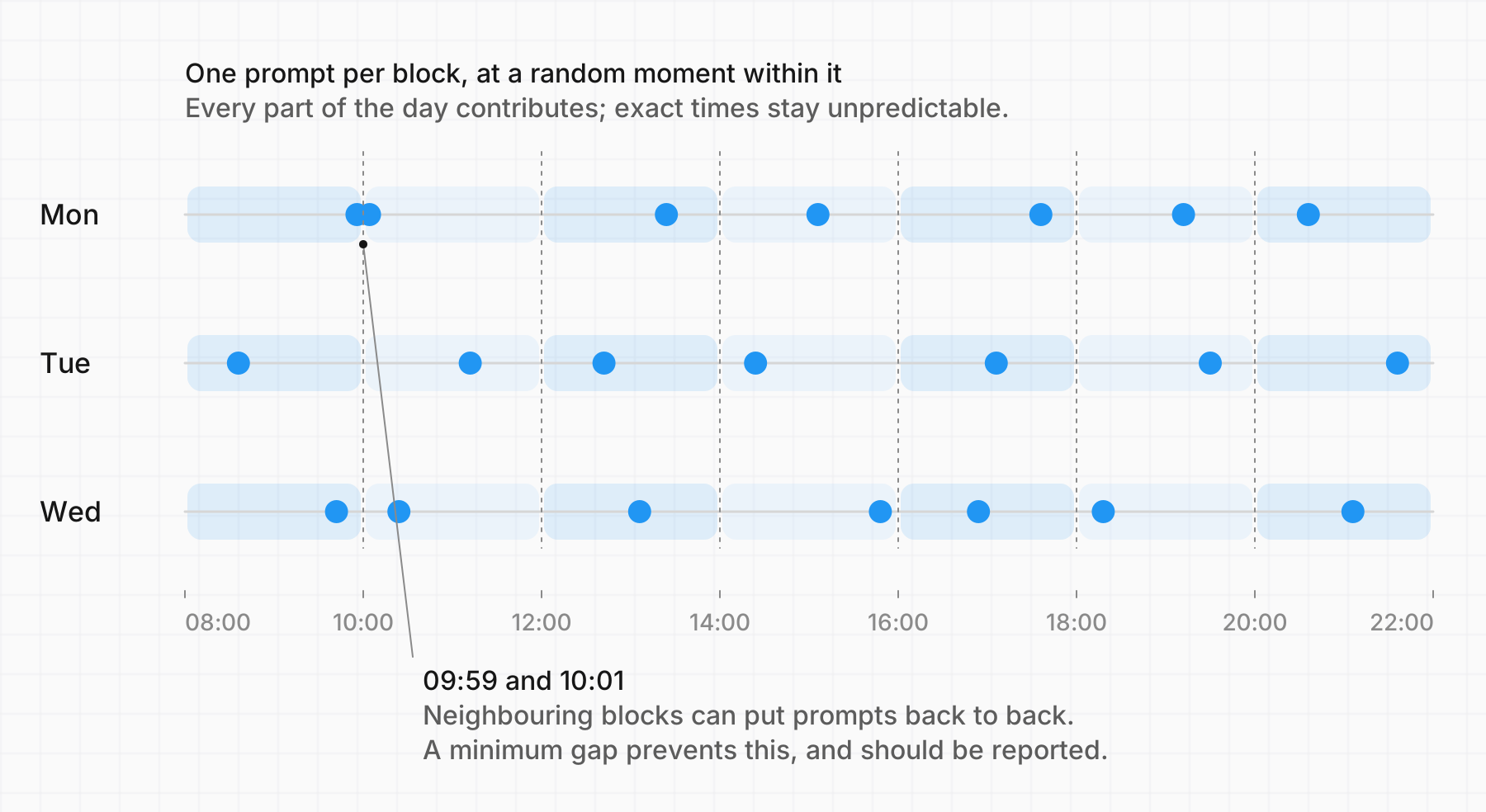
For example, divide 08:00 to 22:00 into seven two-hour blocks and schedule one survey per block. This distributes planned assessments somewhat evenly across the day while retaining uncertainty about their exact timing.
Advantages
At the same time, the random timing within each block makes prompts less predictable than in fixed sampling. This can reduce repeated sampling of exactly the same routines and limit participants' ability to anticipate precisely when an assessment will occur.
Compared with fully random sampling, the predefined blocks also reduce the chance that several prompts cluster within one part of the day while other periods remain unsampled. Adding a minimum time gap can further prevent closely spaced interruptions.
Disadvantages
Prompts can also occur close together across adjacent block boundaries. For example, one assessment could be scheduled at 09:59 and the next at 10:01. A minimum time gap can prevent this, but it also changes the sampling procedure and should therefore be reported clearly.
As with random sampling, the intervals between consecutive assessments remain unequal. Temporal or lagged analyses should therefore account for the actual elapsed time rather than automatically assuming that consecutive observations are equally spaced.
Finally, similar to other time-based sampling schemes, brief or rare events may occur entirely between assessments and would then have to be recalled retrospectively. Semi-random sampling is consequently less suitable when the research question focuses on discrete events whose timing cannot be predicted in advance.
When to use
Choose the number and width of the sampling blocks, as well as any minimum interval between prompts, based on the time scale of the process being studied. Our complete guide on how to run an ESM or EMA study provides a more in-depth discussion of these design choices.
Event-based sampling
Event frequency is not under the researcher’s control and may differ substantially between participants. This introduces practical and statistical considerations: researchers need to decide whether to fix the study duration, the number of events per participant, or some combination of both. Your decision may affect power calculations, participant burden, and compensation, especially when some participants need much longer than others to provide enough event reports.
Another important design choice is when the ESM or EMA assessment occurs relative to the event: before, during, immediately after, or after a delay. These timings capture different information. For example, a report after an argument can assess the event and its aftermath, but studying what preceded it requires measurements collected beforehand rather than retrospective reconstruction.
Event-contingent sampling designs can be participant-initiated or sensing-triggered.
Participant-initiated sampling
Advantages
Because participants can report shortly after the event, the delay between the experience and the assessment can remain relatively short, thereby reducing recall demands compared with asking about the same event much later.
Disadvantages
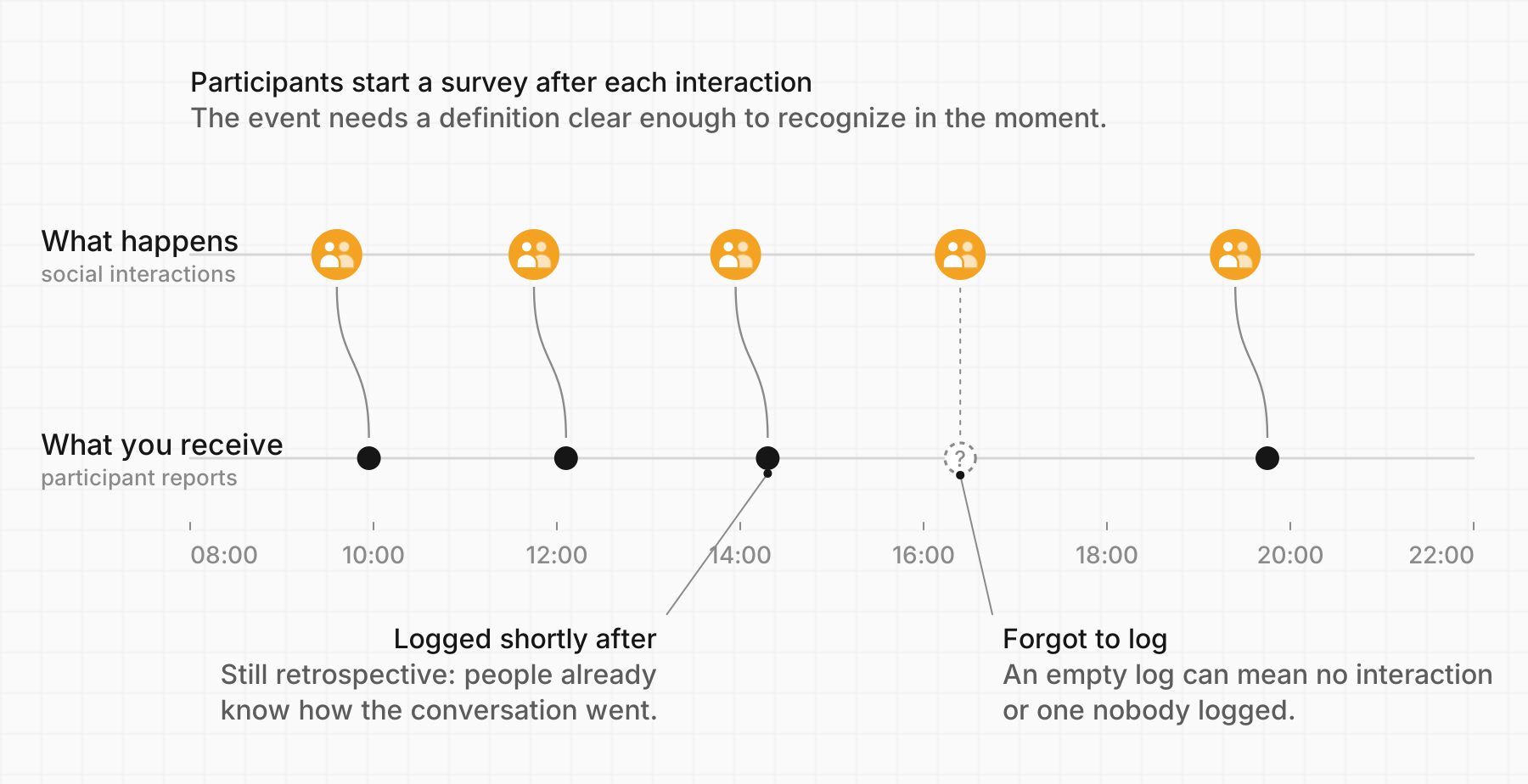
Participants’ interpretation ofthe event definition may differ or change over time, which can introduce selection bias in which events are reported. Moreover, reports completed after an event remain retrospective. Even with a short delay, participants already know how the event unfolded, which can influence how they evaluate what they experienced during it. For example, after a panic attack has passed, knowing that the feared outcome did not occur may affect reports of perceived threat during the episode.
A further challenge is that unreported events are usually invisible to the researcher. An empty event log may mean that no event occurred, but it may also mean that an event occurred and was not reported. This makes compliance harder to determine than in time-based sampling.
When to use
Because the absence of an event report is ambiguous, ESM or EMA researchers may consider adding scheduled checks to assess whether relevant events occurred without being reported. Alternatively, you can provide time-based reminders that repeat the event definition, so participants are periodically reminded which events they should report and are less likely to forget to initiate an assessment.
Sensing-triggered sampling
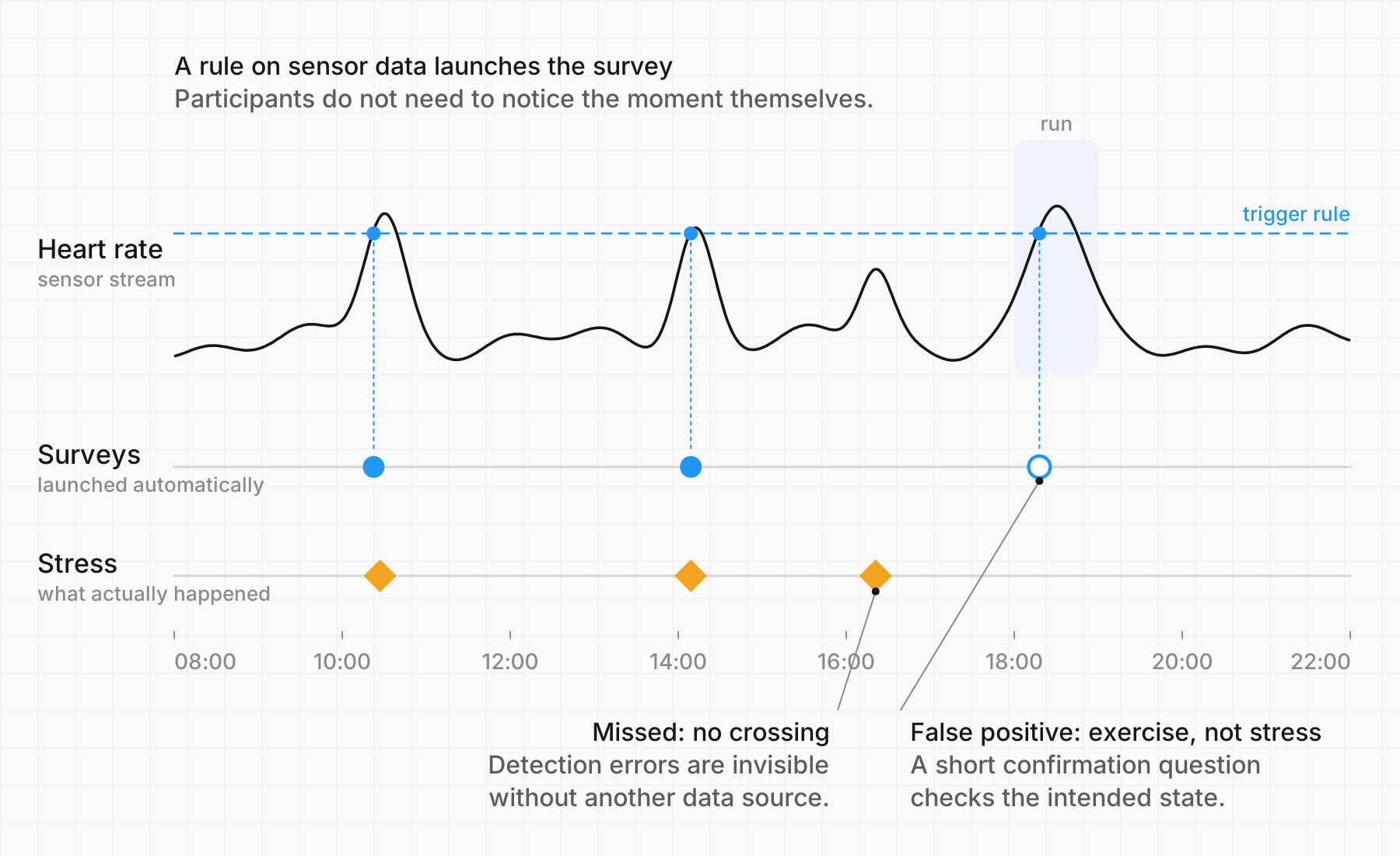
Examples include entering a predefined geographic area, such as a bar or museum, coming into proximity with a Bluetooth beacon, for example to indicate social presence, or detecting a period of physical activity based on heart rate or movement data. More complex systems can combine multiple signals to estimate whether a relevant state is likely to occur, such as craving or heightened stress.
Advantages
It can also bring self-report assessments closer in time to relevant events or contexts that time-based prompts may miss. In addition, the sensor stream can provide more objective information about what happened before, during and after the event, such as changes in location, movement, or physiology. These data do not replace self-report in ESM or EMA, but they can complement it by adding information about the event and its precursors that participants may not notice or report themselves.
Disadvantages
Moreover, a detected signal is not necessarily equivalent to the psychological state of interest. This is called the mind-body problem. An elevated heart rate, for example, could reflect exercise rather than stress. A short confirmation question can therefore be useful to establish whether the intended event or context was actually present.
Sensing-triggered designs in ESM or EMA also require more technical development, testing, and monitoring than conventional time-based schedules and may involve privacy-sensitive sensor information. Finally, because assessments are concentrated around detected events, they provide limited information about ordinary moments outside those contexts unless combined with another sampling scheme.
When to use
It is especially useful when objective information about the occurrence, timing, or context of an event is valuable alongside participants’ subjective reports. Typical examples include location transitions, activity episodes, or other sensor-detectable behaviors.
Burst sampling designs
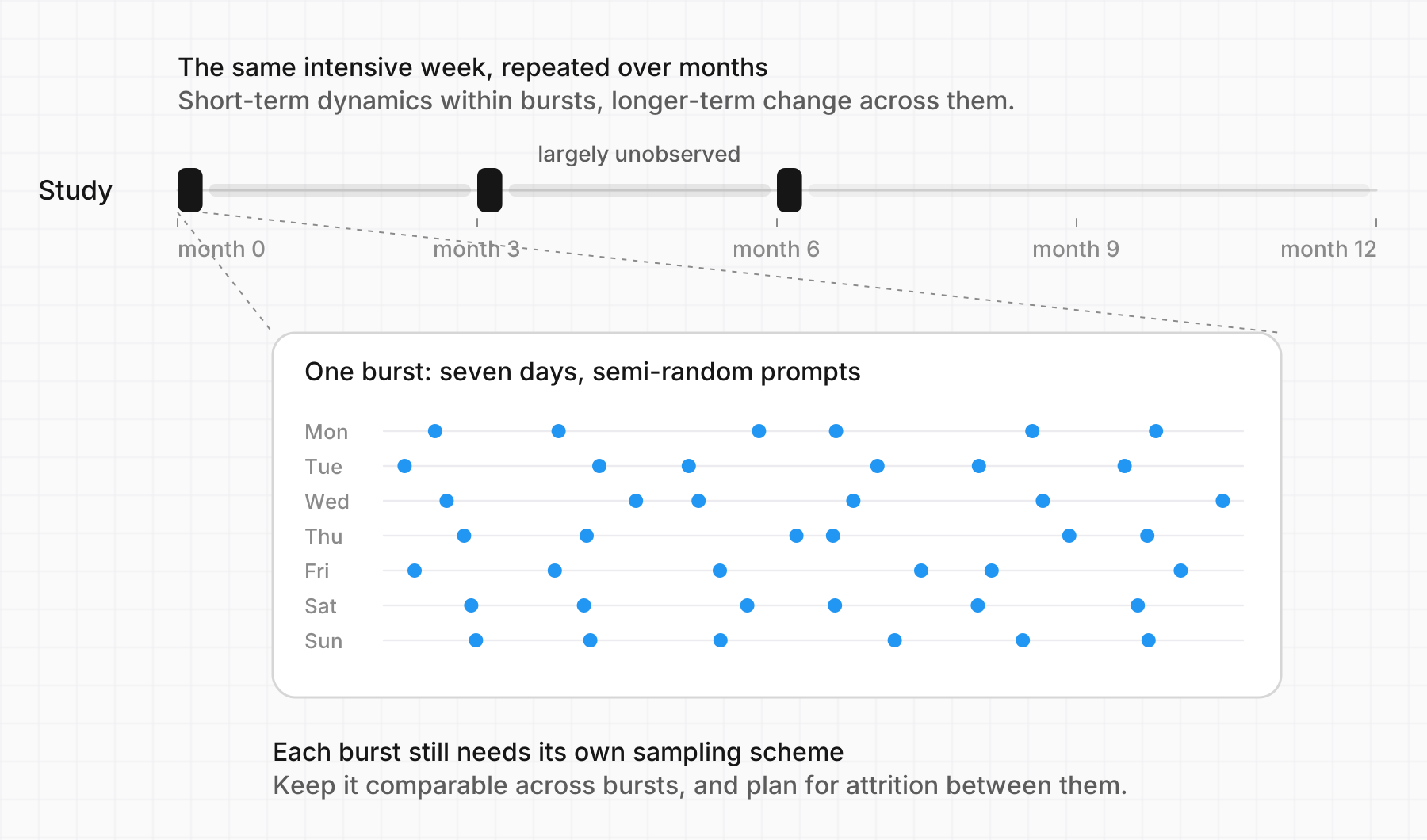
A burst describes when intensive measurement periods occur, but not how assessments are scheduled within those periods. Each burst therefore still requires a sampling scheme, such as fixed, semi-random, participant-initiated, or sensing-triggered sampling.
Depending on the time scale, bursts can be delivered across months or years, or around an event or short-term trajectory.
Measurement bursts across months or years
Advantages
When bursts are designed comparably, they can also reveal whether characteristics of daily life, such as average levels, variability, or temporal associations, change over time or remain stable.
Disadvantages
Repeated bursts also require participants to remain engaged with the study over a relatively long period, sometimes for months or years. This increases the risk of attrition across successive bursts and should be anticipated when planning recruitment and statistical power. Selective dropout can also reduce comparability across ESM or EMA waves if participants who remain differ systematically from those who leave the study.
In addition, individual bursts may coincide with seasonal effects, holidays, examinations, illness, or other unusual periods, which can be mistaken for longer-term change. Analyses also need to reflect the additional hierarchical structure created by repeated observations within bursts and bursts within participants.
When to use
Short intensive bursts
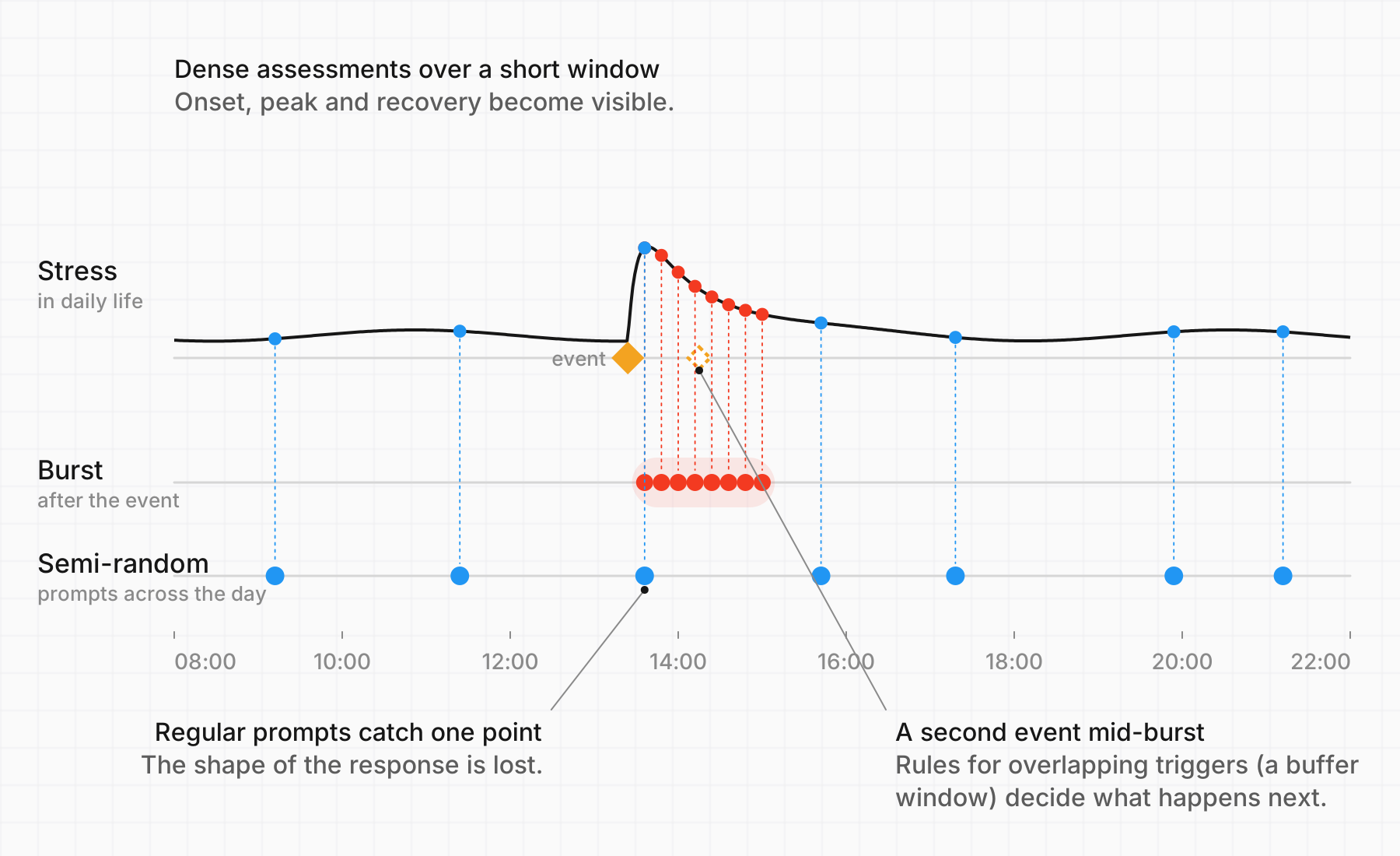
For example, an ESM or EMA study may repeatedly assess participants during the first hour after waking or after a stressful interaction. The goal is not to represent the entire day, but to obtain dense coverage of a short-term trajectory.
Advantages
Unlike a single event-based assessment, short intensive bursts do not merely capture whether or how an event occurred, but how the participant’s state changes across multiple moments surrounding or following it.
Disadvantages
Because ESM or EMA measurement is concentrated within selected windows, little is learned about periods outside the burst. Interpretation therefore depends strongly on how the burst is initiated and whether relevant measurements before or after the trajectory are available.
Compliance within the burst is particularly important. A participant may technically respond to the burst by completing its first assessment, but if later follow-ups are missed, the intended trajectory cannot be estimated. Researchers should therefore consider not only overall compliance, but also completion across the sequence of assessments within each burst.
When to use
Hybrid designs
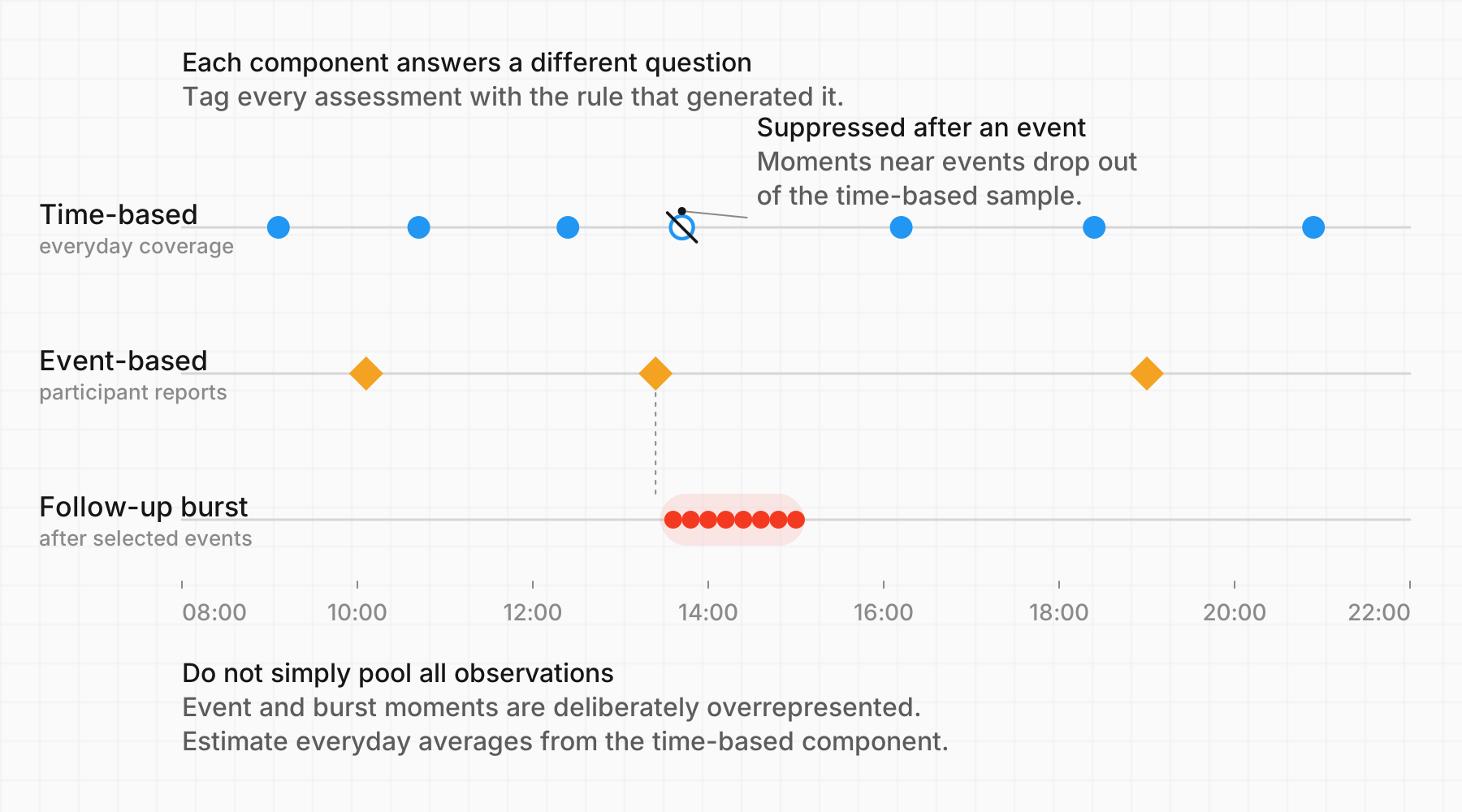
For example, semi-random prompts can sample everyday mood across the working day, participant-initiated reports can capture stressful interactions, and selected meetings can trigger a short recovery burst. Hybrid designs in ESM or EMA are therefore useful when a single sampling scheme cannot provide all observations needed to answer the research question.
Advantages
Time-based assessments can also provide observations before an event happens or reveal events that participants did not report themselves, helping to address some of the blind spots of purely event-based sampling.
Disadvantages
More importantly, the different components sample different types of moments. Event-triggered assessments deliberately overrepresent target events, whereas time-based assessments are intended to sample everyday experience more broadly. Pooling all observations without considering how they were selected can therefore produce misleading estimates.
Suppressing scheduled prompts after a target event can also introduce bias, because moments close to those events are then systematically excluded from the time-based sample. Simply including prompt type as a variable does not necessarily remove this bias.
When to use
Researchers should record which sampling rule generated each assessment and define in advance how the different components will be analysed. Estimates of everyday averages may, for example, need to rely primarily on the time-based component, whereas event-related analyses should reflect the selective nature of event-triggered observations.
An interactive sampling scheme selector
Settings that matter across all sampling schemes
Match the timing to the process
Define the eligible assessment period
Assessment periods may differ for different ESM or EMA participants, for example to match individual work schedules or waking hours, as long as those differences are consistent with the study aims and accounted for in the analysis.
Distinguish prompt from response time
Specify burden controls and their consequences
Plan for missingness and unequal intervals
For temporal models, a 10-minute interval and a three-hour interval should not be treated as equivalent. Even fixed schedules develop unequal gaps through delayed responses, missed prompts, and overnight breaks. Ignoring unequal timing can bias estimated dynamics. Use an analysis that handles the timing adequately, which may include continuous-time modelling.
Pilot the complete ESM or EMA protocol
Dr. Egon Dejonckheere
Egon Dejonckheere is an Assistant Professor at Tilburg University, affiliated with KU Leuven, specializing in ambulatory assessment and intensive longitudinal research. His work combines methodological innovation to improve these methods with applications in mental health and emotion dynamics, and includes dozens of smartphone-based studies in daily life.


FAQ
01.
Random sampling draws assessment moments across the whole eligible sampling day. Semi-random sampling first divides that day into blocks and then draws moments within each block. Both sampling strategies produce irregular intervals, but semi-random sampling controls coverage across the sampling day.
02.
Yes. Hybrid designs are often useful when researchers need both representative everyday observations and targeted observations around specific events.
03.
No. Even when participants report shortly after an event, they are still looking back on something that has already happened. Their report may also be influenced by knowing how the episode ended, which can change how they evaluate what they felt or expected during the event.
04.
There is no universal minimum. The interval should reflect the timescale of the process, participant burden, and the statistical model, while avoiding unnecessary clustering.
05.
Often, yes. Daily diaries are commonly scheduled at a fixed time, such as every evening, especially when the aim is to compare the same period across days. However, the sampling time and recall period are separate design choices: a diary completed at 21:00 can ask about the whole day or about the participant’s current state, and some studies may instead allow participant initiation at an individually chosen time such as bedtime.