

Dr. Egon Dejonckheere
Egon does research in Emotion, Clinical Psychology and Abnormal Psychology. His most recent publication is 'The Bipolarity of Affect and Depressive Symptoms', featured in Journal of Personality and Social Psychology: Personality Processes and Individual Differences.




What is a just-in-time adaptive intervention?
The defining feature of a JITAI is dynamic, real-time adaptation. Unlike static interventions, such as stand-alone mobile apps that deliver the same content to all users, or conventional time-based and tailored approaches, such as Ecological Momentary Interventions that may customize support to relatively stable participant characteristics at baseline, JITAIs continuously update the content and level of support throughout the intervention period.
This adaptation is driven by incoming data on the individual’s current state and context, often collected through repeated self-report (Ecological Momentary Assessment / Experience Sampling) or passive mobile or wearable sensing. These data are used to determine whether to intervene, when to intervene, and what to deliver at each moment. The process is governed by pre-specified decision rules that map current states onto a set of intervention options, including the option to withhold support when intervention is unlikely to be beneficial.
JITAIs are widely used in digital health and behavior change research. Their study and design are often multidisciplinary and draw on behavioral science, mobile health (mHealth) research, statistics, and computer science.

How JITAIs decide when to intervene
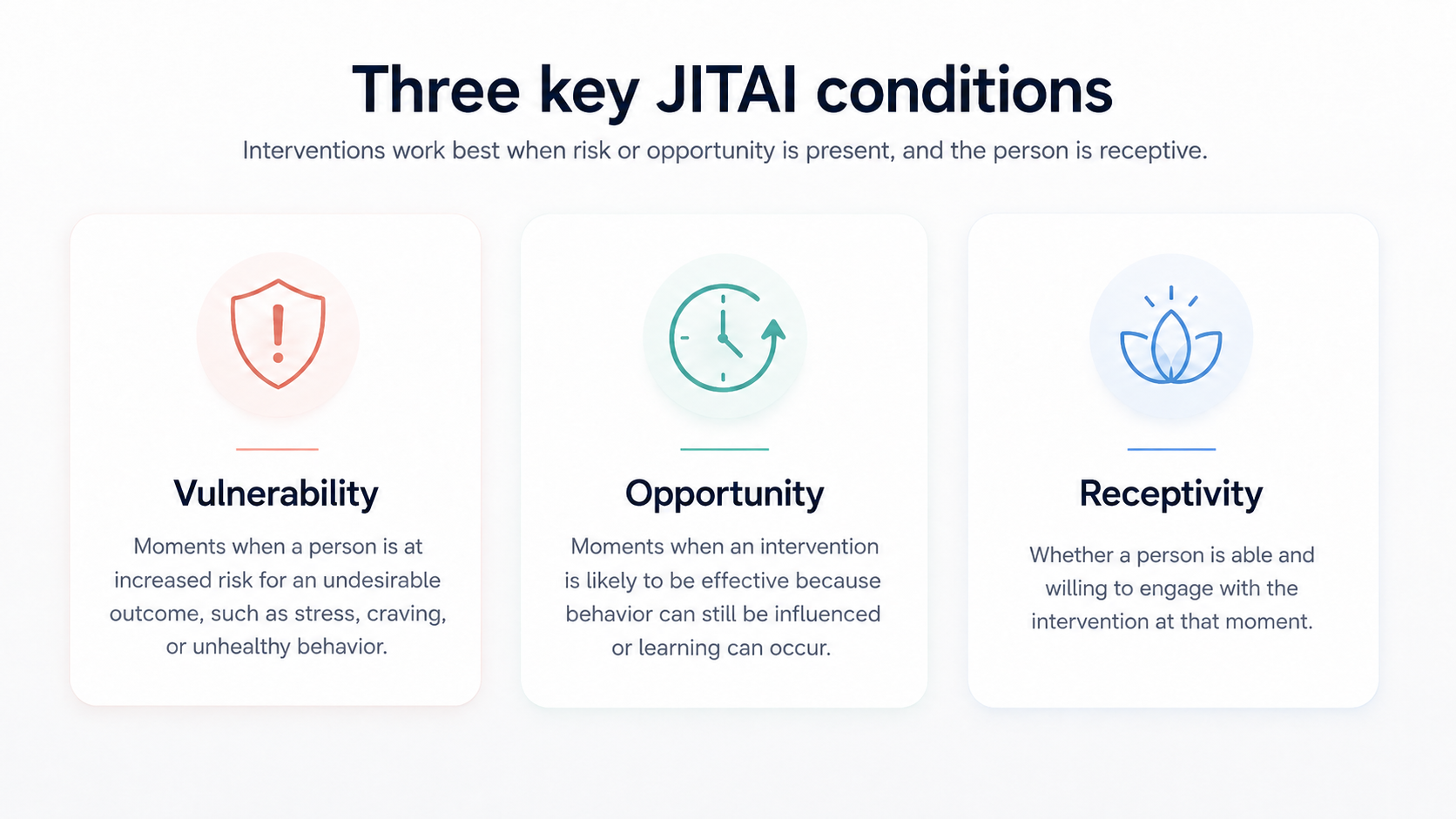
Vulnerability
For example, someone trying to reduce alcohol use may generally be doing well, but become vulnerable in the evening when feeling tired or when being in a social setting where others are drinking. Mobile JITAIs aim to detect these moments and provide support before the situation escalates.
Opportunity
For example, a prompt encouraging a short walk is more effective when someone has been sitting for a long time, rather than hours later. Similarly, providing feedback immediately after a behavior increases the chance that the person can learn from it and adjust future actions.
Receptivity
For example, a notification delivered during a meeting or while driving is unlikely to be acted upon. Repeatedly delivering interventions at such moments can reduce engagement and contribute to intervention fatigue over time.
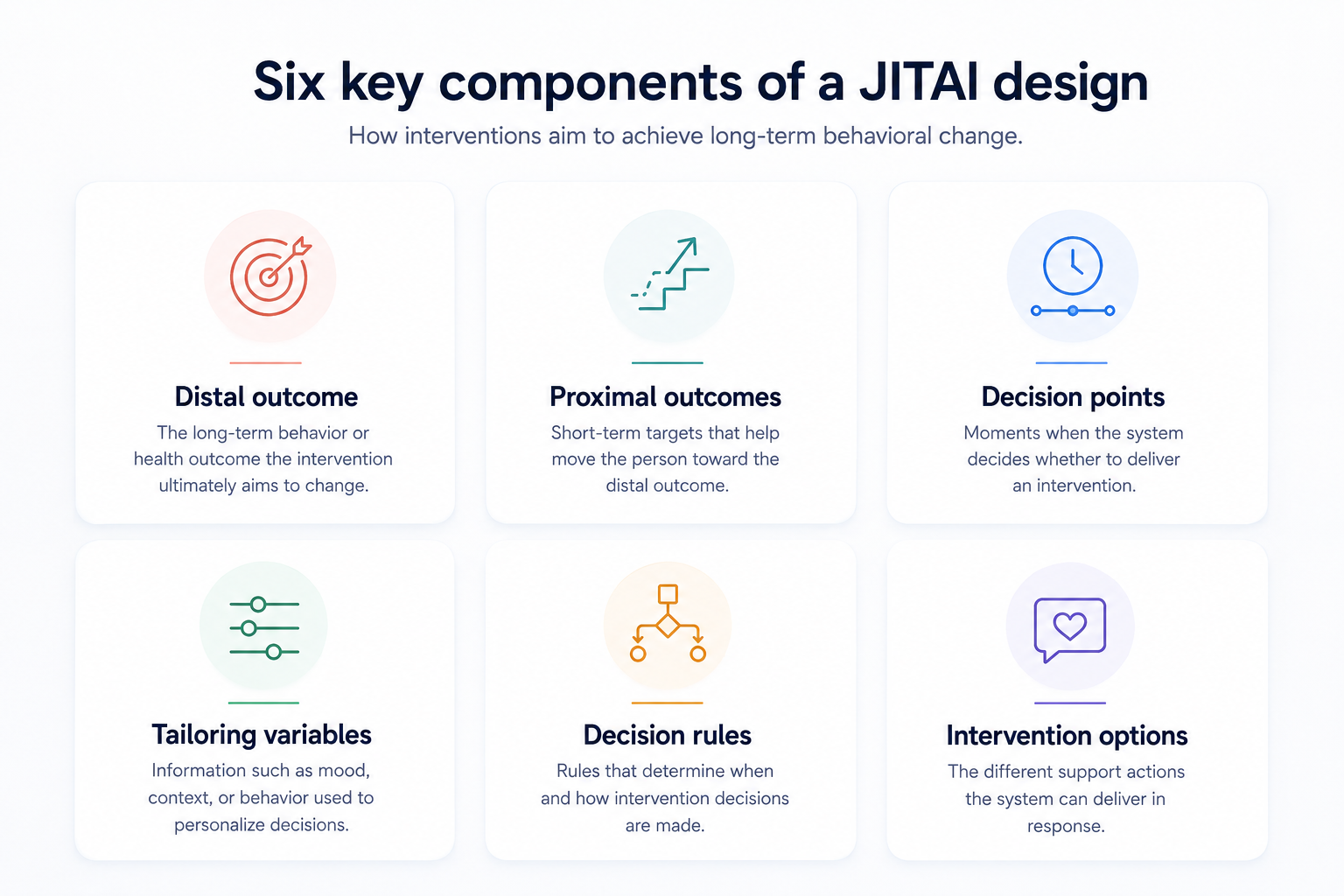
The core components of a JITAI design
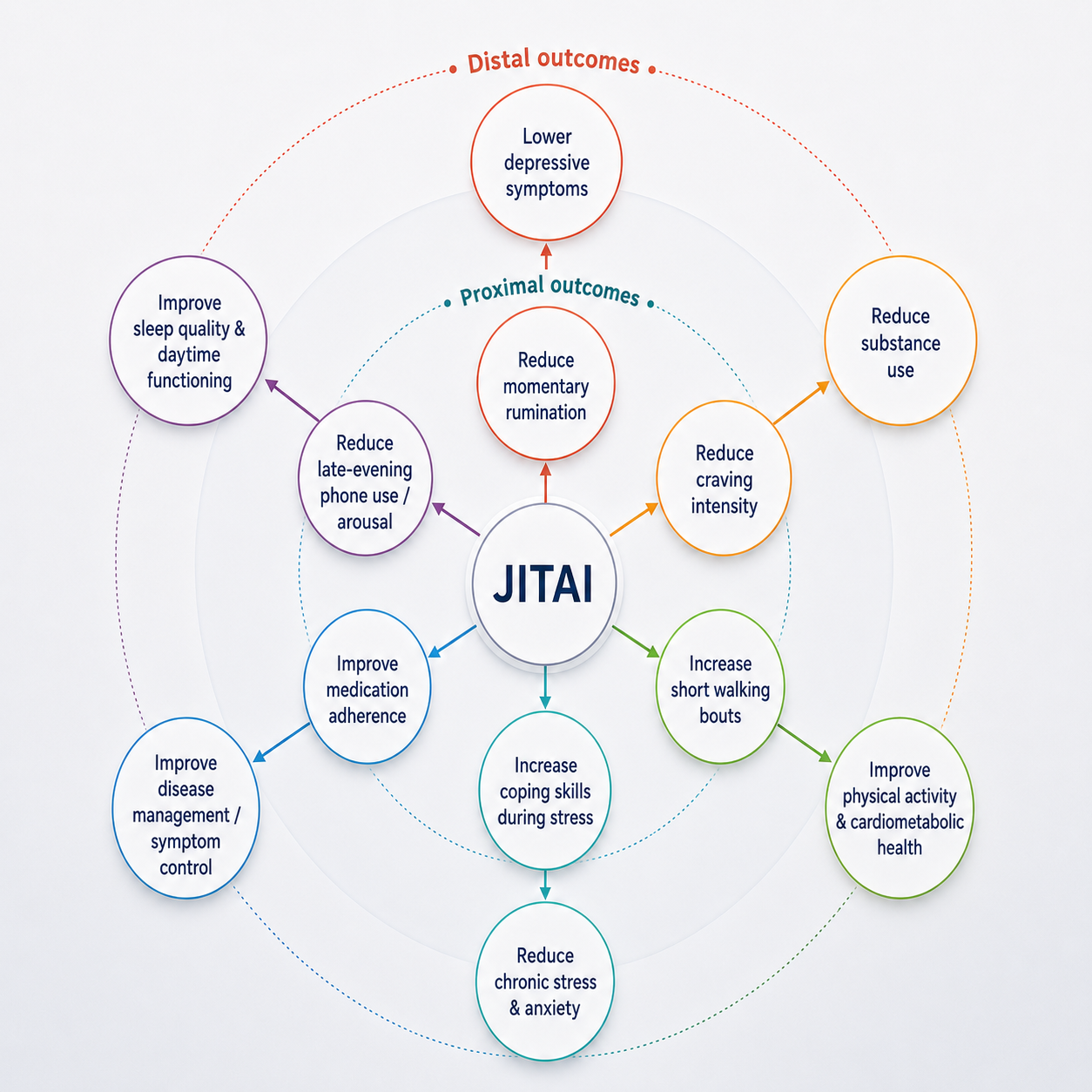
Distal outcome
Proximal outcome
Tailoring variables
They can be collected through active assessments, such as self-report via ecological momentary assessment, or through passive sensing, such as GPS, accelerometery, or device usage. The choice of tailoring variables is critical, as they determine how well the system can detect moments of vulnerability or opportunity and how precisely interventions can be targeted.
Decision points
Because states of vulnerability and opportunity can emerge rapidly and unpredictably, decision points in JITAIs often occur frequently and are closely tied to real-time monitoring. Not every decision point results in an intervention. At each point, the system evaluates whether delivering support isappropriate, allowing for both action and inaction.
Decision rules
These rules operationalize the adaptive nature of mobile health interventions by linking real-time data to action in a systematic way. For example, a rule may specify that if a risk score exceeds a certain threshold, a specific intervention is delivered; otherwise, no action is taken.
Intervention options
Intervention options can vary in type, intensity, timing, and delivery mode. Importantly, JITAIs explicitly include the option to provide no intervention when it is unlikely to be beneficial. This reflects a key design principle: support should only be delivered when it is expected to add value.
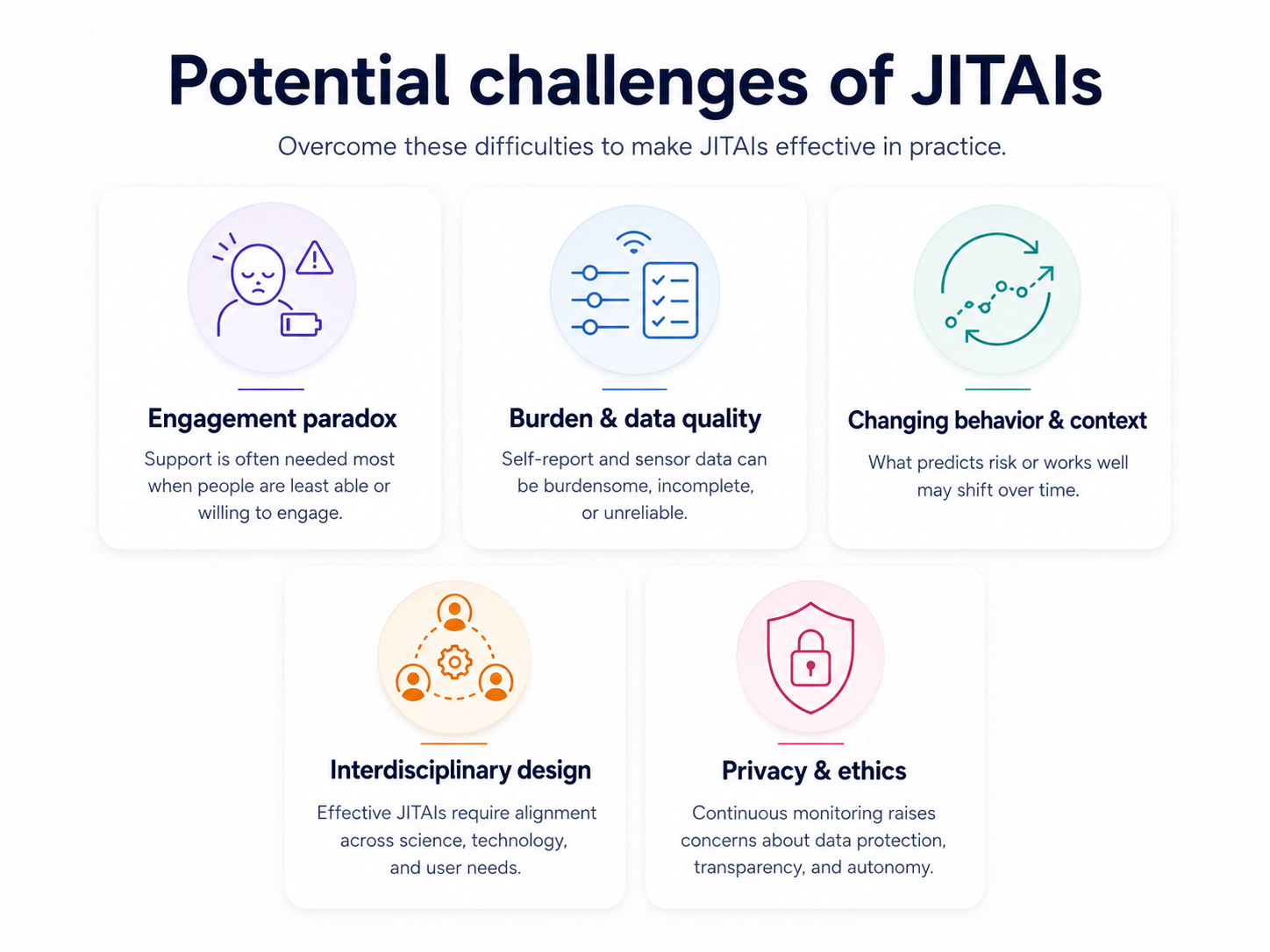
Potential challenges of JITAI designs
The engagement paradox
As a result, mobile health interventions delivered at these critical moments may be ignored, delayed, or processed superficially. In some cases, poorly timed interventions may even have unintended negative effects, for example by increasing frustration or interrupting ongoing activities. This creates a central design tension: JITAIs must identify moments of need, while also ensuring that support is delivered when individuals are able to engage with it effectively.
Burden and data quality
When tailoring variables are derived from passive sensing, different challenges arise. In real-world deployment, sensor data are often incomplete or unreliable due to device non-wear, battery depletion, connectivity issues, or differences in proprietary algorithms across devices. In addition, many internal psychological states cannot be directly observed, creating a “mind-body gap” where inferences from sensor data remain imperfect.
Because mobile health interventions rely on these inputs to determine when and how to intervene, poor data quality directly undermines adaptivity. Decisions based on missing or erroneous data may be mistimed or inappropriate, and in some cases worse than no intervention at all.
Changing behavior and context over time
As a result, fixed decision rules can become outdated, leading to less effective or poorly timed interventions. JITAIs therefore need to account for ongoing change, either by updating rules or by using adaptive approaches.
Interdisciplinary design and complex setup
In addition, JITAI development often involves multiple stakeholders, such as researchers, clinicians, developers, and end users. Aligning theoretical goals, technical constraints, and user needs is not straightforward, and misalignment can lead to interventions that are either difficult to implement or poorly suited to real-world use.
As a result, effective JITAI design requires close collaboration across disciplines and stakeholders, as well as iterative development to ensure that the system remains both scientifically grounded and practically usable.
Privacy and ethical considerations
Beyond data protection, JITAIs also raise questions about transparency and autonomy. Because intervention decisions are made by the system, users may not fully understand why certain interventions are delivered or withheld. This can affect trust and perceived control.
Ethical JITAI design therefore requires clear consent procedures, data minimization, and mechanisms that give users insight and control over how data are used and how interventions are triggered.
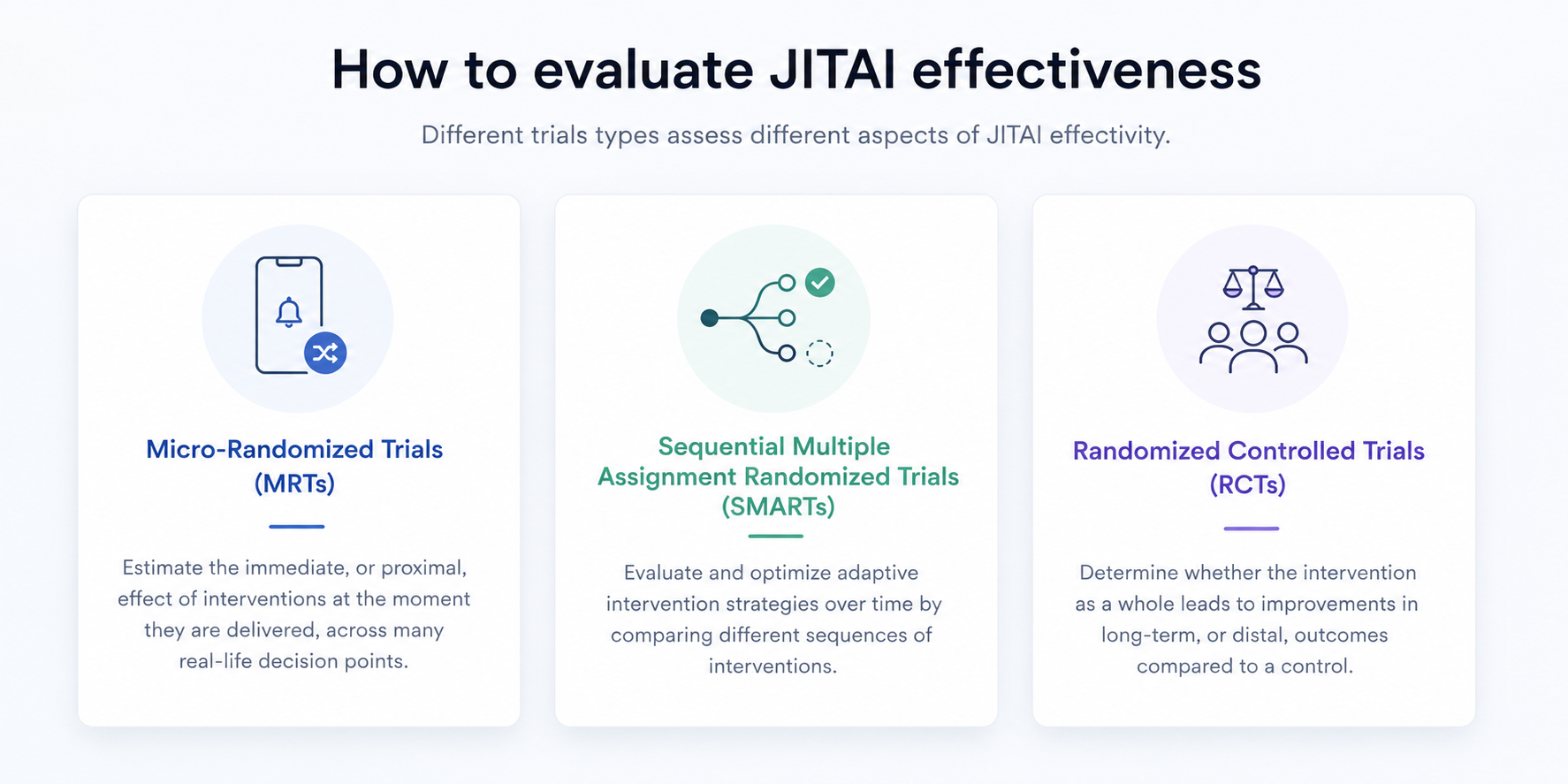
Evaluating the effectiveness of a JITAI
Micro-randomized trials
Because randomization occurs many times within individuals, MRTs provide detailed insight into when and under which conditions an intervention is effective. For example, they can be used to test whether a prompt reduces stress in the next hour, and whether this effect depends on context or prior state.
Unlike traditional trial designs, MRTs focus on within-person, momentary effects rather than overall outcomes. This makes them particularly well suited for evaluating the core logic of JITAIs, where timing and context are central.
Sequential multiple assignment randomized trials
This allows researchers to compare different sequences of interventions, such as whether individuals who do not respond to an initial strategy benefit more from intensifying support or switching to a different approach. As such, SMARTs focus on identifying effective adaptation strategies rather than momentary intervention effects.
Compared to MRTs, which operate at the level of individual decision points, SMARTs evaluate broader treatment pathways over time. They are particularly useful for informing how JITAIs should adapt across phases of an intervention.
Randomized controlled trials
In the context of JITAIs, RCTs are used to determine whether the intervention as a whole leads to improvements in distal outcomes, such as symptom reduction or behavior change. However, they provide limited insight into how and when the intervention produces these effects.
Unlike MRTs and SMARTs, RCTs do not capture the time-varying and adaptive nature of JITAIs. While they are essential for establishing overall efficacy, they are less suited for understanding the underlying mechanisms or optimizing the timing and delivery of interventions.
Examples of JITAIs
Increasing physical activity
In a micro-randomized trial, researchers found that contextually tailored activity suggestions increased subsequent walking compared with moments when no suggestion was sent. This example shows how JITAIs can support everyday behavior change by intervening when action is feasible.
Supporting smoking cessation
In a randomized controlled trial among adults with low income, a tailored just-in-time smoking-cessation app was compared with a standard smoking-cessation app. The JITAI approach was designed to provide more personalized and timely support around smoking triggers, cravings, and lapse risk. The study found that the tailored JITAI improved smoking-cessation outcomes compared with the comparison app, suggesting that just-in-time personalization may be especially useful when people face changing risk contexts in daily life.
Reducing depressive rumination
In a pilot randomized controlled trial, researchers tested a mobile rumination-focused CBT intervention for patients in therapy for clinical depression. Participants were prompted by smartphone to report rumination-related symptoms several times per day, and the intervention was personalized to their own rumination timing patterns. When rumination was detected, the system delivered mobile CBT materials designed to interrupt the episode and reduce carry over into later rumination.
Compared with a no-treatment control condition, participants receiving the JITAI reported larger reductions in the number of rumination episodes and in the average time spent ruminating. This example shows how JITAIs can target short-lived psychological processes or symptoms as they occur in daily life (i.e., proximal outcomes), rather than treating depression a general syndrom.
Roots and history of JITAI
A key foundation lies in the adaptive treatment strategy literature, developed by Susan Murphy and colleagues in the early 2000s, which introduced methods for adjusting support based on individual response over time. Around the same period, approaches such as EMA or ESM had already demonstrated that it was feasible to measure people’s experiences repeatedly in their daily lives, enabling the use of real-time data not only to understand behavior, but also to guide intervention.
The widespread adoption of smartphones further accelerated this development by enabling continuous data collection through mobile sensing and providing a scalable platform for delivering interventions in real time. The term “just-in-time adaptive intervention” was later introduced by Inbal Nahum-Shani and colleagues in 2015, bringing these ideas together into a unified design framework. Since then, the field has grown rapidly, with advances in experimental designs, statistical methods, and real-world applications across awide range of domains, including mental health, physical activity, and workplace well-being.
Dr. Egon Dejonckheere
Egon Dejonckheere is an Assistant Professor at Tilburg University, affiliated with KU Leuven, specializing in ambulatory assessment and intensive longitudinal research. His work combines methodological innovation to improve these methods with applications in mental health and emotion dynamics, and includes dozens of smartphone-based studies in daily life.


FAQ
01.
A Just-in-Time Adaptive Intervention (JITAI) is a type of intervention that delivers support in real time by adapting to a person’s current state and context. It uses data such as self-reports or sensor inputs to decide when and how to intervene, with the goal of providing the right support at the right moment.
02.
Ecological Momentary Interventions (EMIs) deliver interventions in real-world settings, often based on time or simple triggers. JITAIs extend this approach by continuously adapting when and how support is delivered based on incoming data and decision rules, making them more dynamic and personalized.
03.
JITAIs typically use a combination of self-report and passive sensing data. Self-report is often collected through methods such as Ecological Momentary Assessment (EMA) or Experience Sampling Methodology (ESM), while passive data can include location, activity, or device usage. These data are used as tailoring variables to guide intervention decisions.
04.
In JITAIs, vulnerability refers to moments of increased risk (e.g., stress or craving), opportunity to moments where intervention can be effective (e.g., a teachable moment), and receptivity to whether a person is able and willing to engage. In practice, interventions are delivered when vulnerability or opportunity is present, but only if receptivity is sufficient.
05.
JITAIs have shown promise across a range of domains, including mental health, substance use, and physical activity. Their effectiveness depends on how well they identify the right moments to intervene and how appropriate the delivered support is. Specialized study designs, such as micro-randomized trials, are often used to evaluate their (proximal) effects.
06.
JITAIs are evaluated using a combination of study designs. Micro-randomized trials (MRTs) assess momentary effects of interventions, sequential multiple assignment randomized trials (SMARTs) evaluate adaptive intervention strategies over time, and randomized controlled trials (RCTs) assess overall effectiveness on long-term outcomes.
07.
Key challenges include identifying the right moment to intervene, maintaining user engagement, dealing with missing or noisy data, and ensuring privacy and ethical data use. In addition, designing JITAIs requires integrating insights from multiple disciplines, making development complex.