

5 open-science initiatives every ESM / EMA researcher should know.
TL;DR
The experience sampling (ESM) / ecological momentary assessment (EMA) field is rich with open-science resources that can save you time, improve your methods, and strengthen reproducibility. In this high five blogpost, we review five initiatives you should bookmark today (if you have not already).
How many times have you stared at a blank survey, wondering whether anyone has already used a momentary item for the construct you need? Or spent days wrangling raw experience sampling (ESM) / ecological momentary assessment (EMA) data before writing a single line of analysis code? You are not alone, and the good news is:
The ESM / EMA community has been building tools to solve exactly these problems, in the open.
Below, we highlight five open-science initiatives that span the full research lifecycle, from study design and item selection, all the way through preprocessing and data sharing. Give them a look before your next ESM / EMA study starts.
1. MATILDA: your theory-to-analysis compass
If you have ever felt uncertain about whether your study design actually matches your research question, MATILDA was built for you.
Created by researchers at Utrecht University (led by Dr. Noémi Schuurman and Prof. Dr. Ellen Hamaker), MATILDA is a free, educational platform that helps you align three pillars of intensive longitudinal research: theory, measurement, and analysis.
The site is organized around the decisions every ESM / EMA researcher faces:
- What is your temporal lens?
- What sampling design fits your construct?
- Which statistical model suits your research goal (check out their model navigator)?
- Etc.
Each topic comes as a stand-alone, peer-reviewed (!) article, so you can read exactly what you need and trust the quality of what you find. As you navigate through core constructs on the website, you gradually see how everything is interconnected.
Alternatively, you can sign up to be a reviewer or directly contribute if you have an article idea.
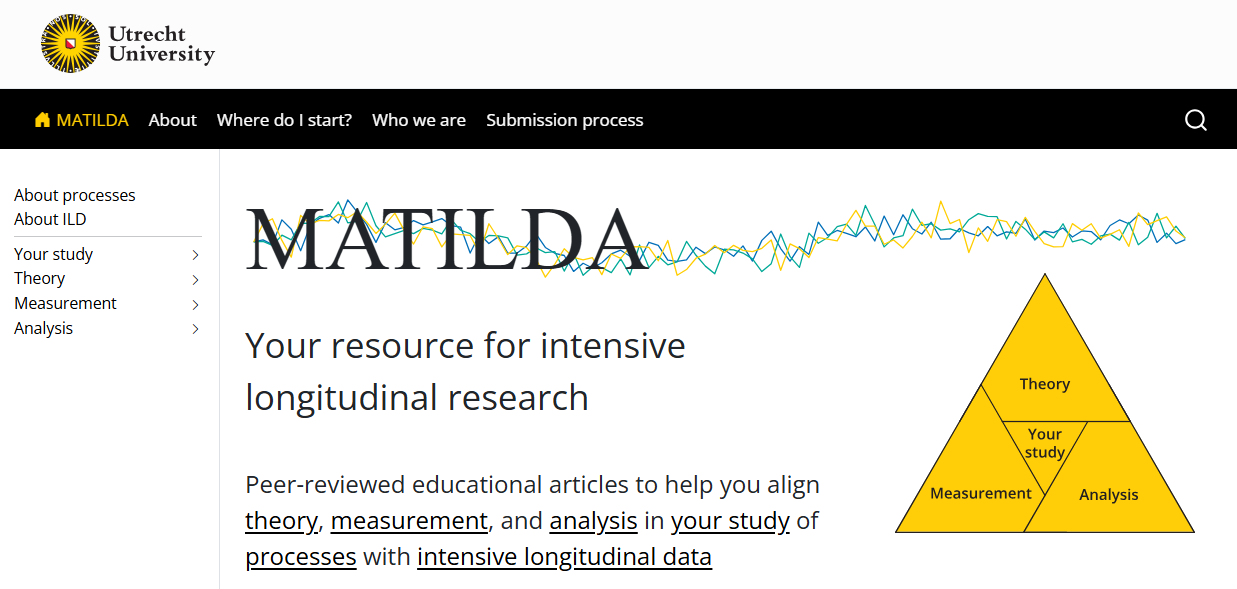
The Matilda website lets you brows different topics about ESM / EMA.
Why it matters: Many ESM / EMA papers suffer from a mismatch between the process researchers claim to study and the analytic choices they make. MATILDA can help you make those mismatches visible before you collect a single data point.
2. The ESM item repository: 3,300+ items at your fingertips
Reinventing the wheel is one of science's most expensive habits. The ESM Item Repository was launched in 2018 and opened its portal in 2019. Led by our former colleagues Dr. Olivia Kirtley and Prof. Dr. Inez Myin-Germeys at KU Leuven, it now holds more than 3,300 ESM / EMA items contributed by researchers worldwide.
You can search by construct, filter by item type, and see how items have been used in published studies. The team has also developed ESM-Q, a consensus-based quality assessment tool developed via a Delphi study with international ESM / EMA experts, to help you evaluate item quality systematically. We reviewed the ESM-Q in an earlier blogpost.
Researchers can also contribute their own ESM / EMA items via the Open Science Framework, helping to grow a shared resource that benefits the whole field. Because science is better when we build on each other's work.
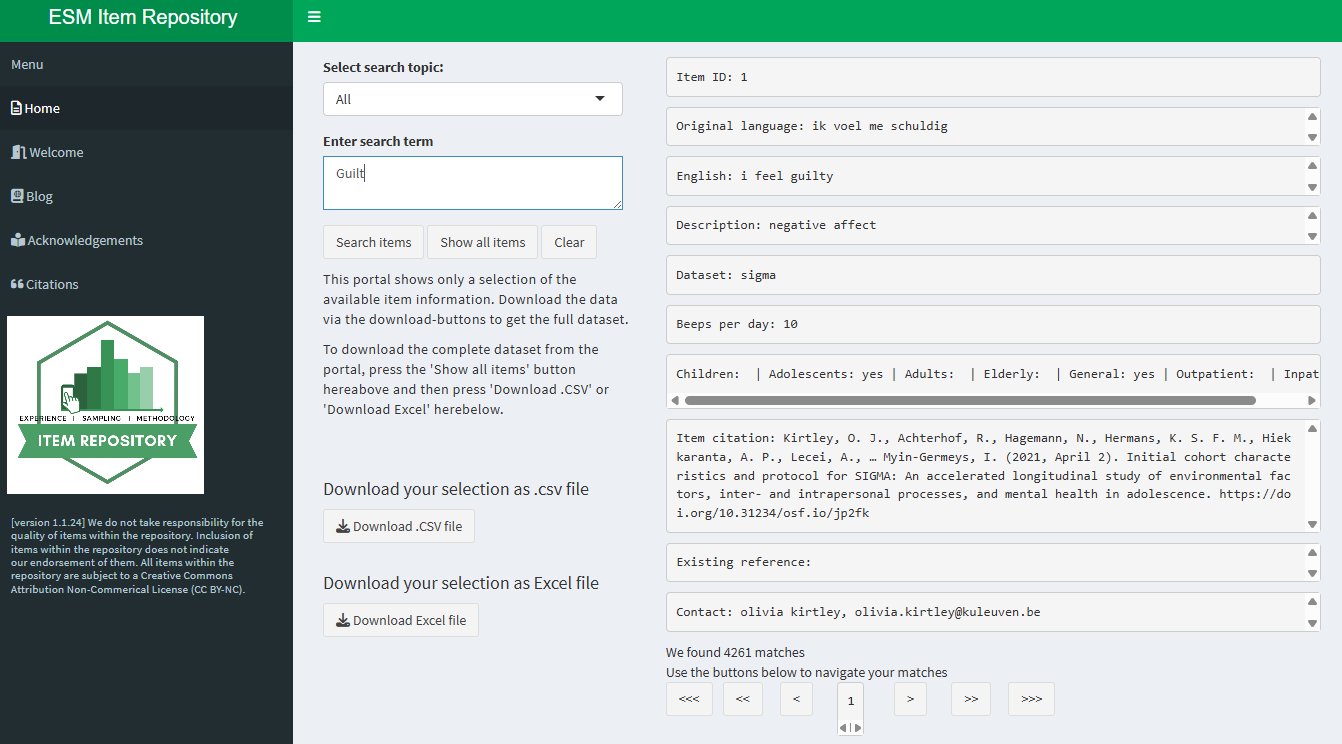
Search the item database of the ESM item repository.
Why it matters: This initiative prevents ESM / EMA researchers from reinventing items and wasting time. It improves comparability across studies by making existing measures visible. It also helps you choose more defensible items, strengthening reproducibility.
3. OpenESM and EMOTE: two routes to open ESM / EMA datasets
What if you could skip data collection entirely and answer your research question with data that already exist? Open datasets make that possible, and the ESM / EMA field now has two excellent platforms for this.
- OpenESM is built and maintained by PhD student Björn Siepe at the University of Marburg, and provides a growing collection of harmonized, openly available ESM / EMA datasets with consistent metadata standards. You can filter by construct, download data via an R or Python interface, and reuse it for secondary analyses or methods research.
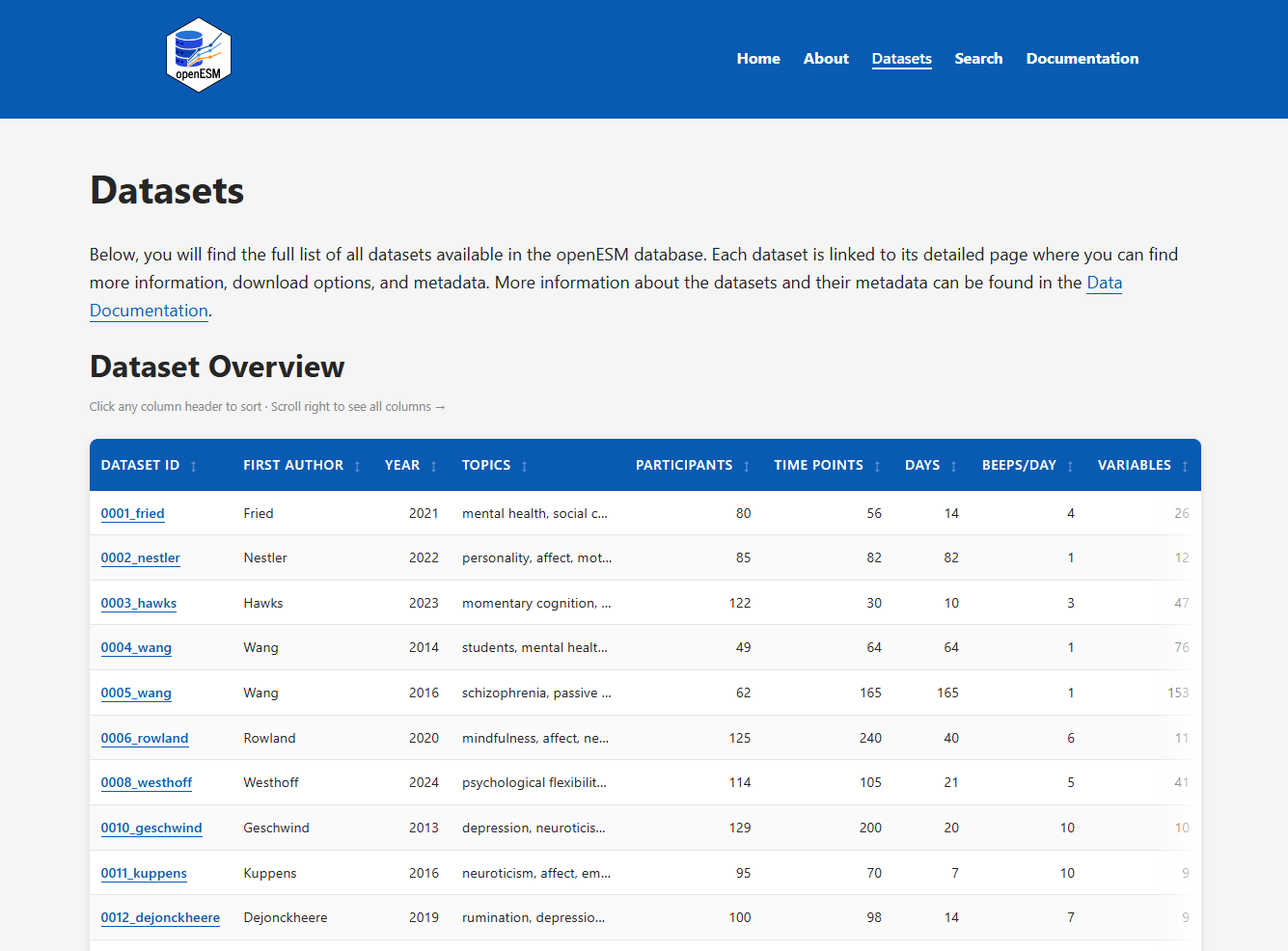
Search ESM / EMA datasets in the OpenESM database.
- EMOTE (Backronym: Everyday Measures Of Temporal Emotions) focuses specifically on ESM / EMA data in emotion research. Developed by our former colleagues Prof. Dr. Elise Kalokerinos and Prof. Dr. Pete Koval (University of Melbourne), it is an open platform where researchers can both deposit and request ESM / EMA datasets on emotions. You can explore datasets by construct, assessment type, number of beeps per day, and more.
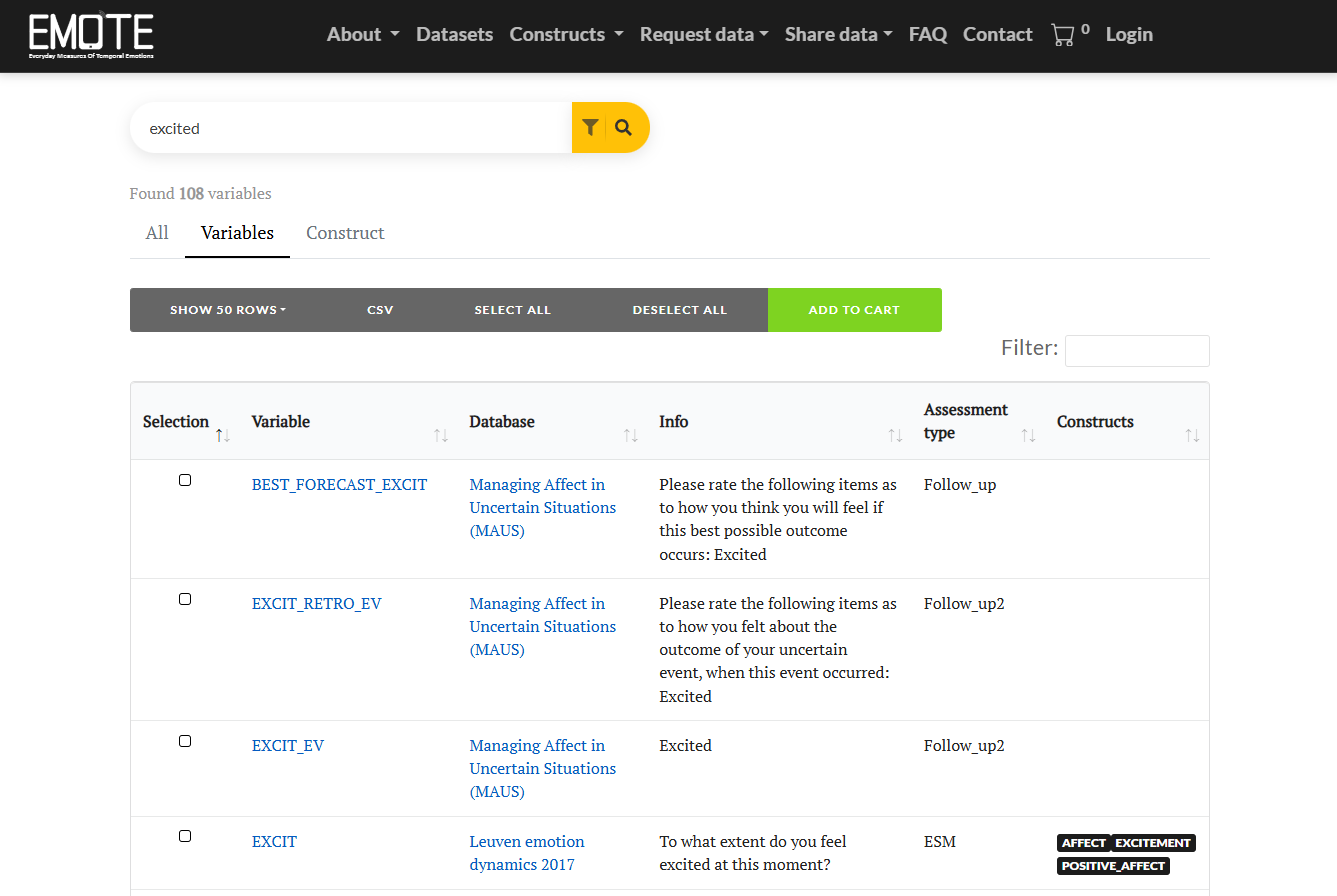
Search ESM / EMA datasets on emotions in the EMOTE database.
Why it matters: Together, these two platforms are changing what it means to do replication and meta-research in ESM / EMA. Data sharing is no longer an afterthought, because of these initiatives it is becoming an infrastructure.
4. The ESM preprocessing gallery: stop guessing, start reporting
Here is a question that makes most ESM / EMA researchers uncomfortable: can you fully describe every preprocessing decision you made on your last dataset? If the answer is uncertain, the ESM Preprocessing Gallery is for you.
Built by Dr. Jordan Revol, Dr. Ginette Lafit, and Dr. Eva Ceulemans (KU Leuven), the gallery is a step-by-step R resource that walks you through a five-step preprocessing framework: data management, adherence to the sampling scheme, participant response behavior, computation of scores, and reporting.
The companion esmtools R package includes ready-to-use R-markdown templates for a preprocessing report and a data quality report. No more burying crucial data decisions in a supplementary materials footnote.
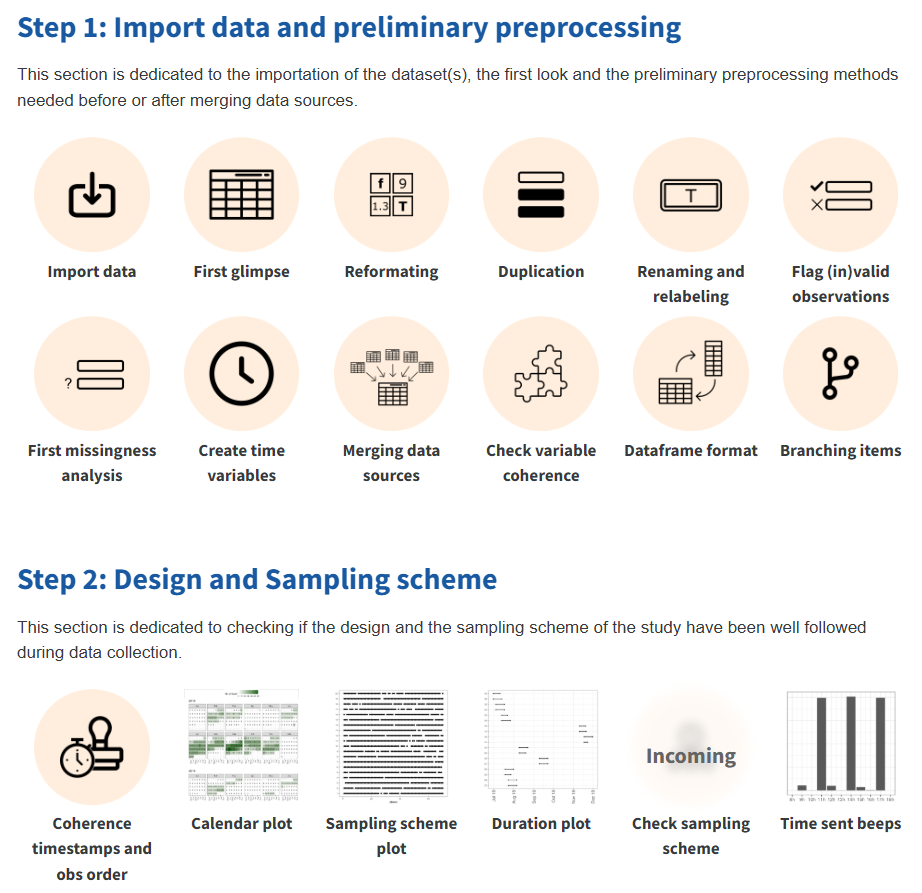
Different code snippets to preprocess ESM / EMA data in the ESM preprocessing Gallery.
Why it matters: transparent preprocessing should become standard practice, it is what makes your results trustworthy and your data reusable by others.
5. The REAL handbook: the complete ESM / EMA guide, free for everyone
If you could only recommend one resource to a researcher starting their first ESM / EMA study, this would be it (we may have some conflict of interest though 😅).
The Open Handbook of Experience Sampling Methodology, edited by Prof. Dr. Inez Myin-Germeys and Prof. Dr. Peter Kuppens, brings together experts from the Center for Research on Experience Sampling and Ambulatory Methods Leuven (REAL) at KU Leuven.
The third edition covers the full ESM / EMA lifecycle: formulating research questions, designing studies and questionnaires, ethical considerations, power calculations, software choices, briefing and debriefing, preprocessing, statistical analysis, and future directions like passive sensing. A brand new chapter on dyadic ESM / EMA research has been added.
Most importantly, it is freely available as an open-access book. There is no paywall standing between a researcher in any corner of the world and 300+ pages of up-to-date, empirically grounded ESM / EMA expertise.
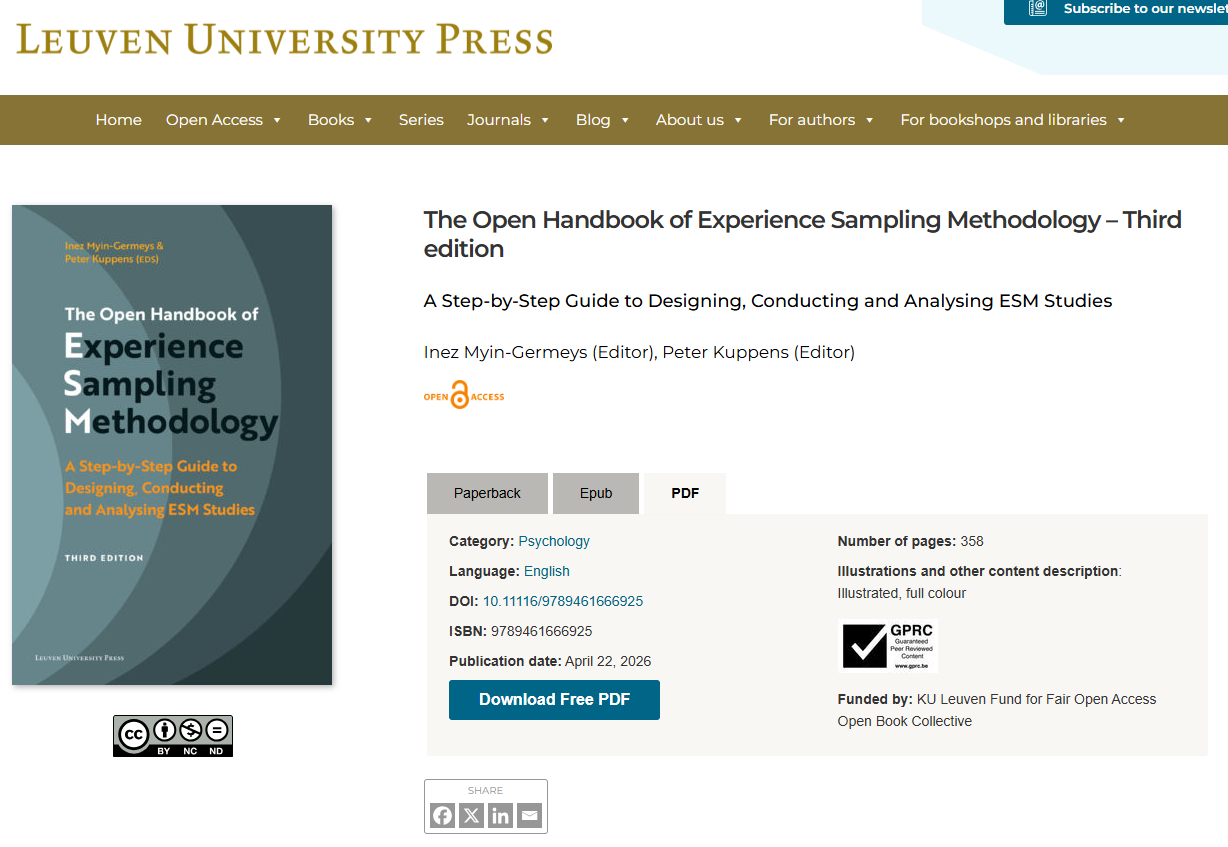
The free REAL handbook about ESM / EMA.
The open-science tide is rising in ESM / EMA research
A few years ago, running an ESM / EMA study meant navigating a methodological landscape with many hidden traps and very few maps. Today, the five resources above cover nearly every step of the journey. Whether you are selecting items, sharing data, cleaning your dataset, or designing your first study, there is an open tool that can help.
Which of these resources is new to you? Or is there an open-science initiative in ESM / EMA that we missed? Contact us directly or tag us on social media, and we might feature it in a next blog series. The community grows stronger when we share what we know!

Dr. Egon Dejonckheere is an Assistant Professor at Tilburg University, affiliated with KU Leuven, specializing in ambulatory assessment and intensive longitudinal research.
His work combines methodological innovation to improve these methods with applications in mental health and emotion dynamics, and includes dozens of smartphone-based studies in daily life.