

5 ways to measure emotions in ESM / EMA.
TL;DR
Measuring emotions in daily life using experience sampling methods (ESM) / ecological momentary assessment (EMA) is harder than it sounds. The format you use to ask "How do you feel?" shapes what you can actually learn from your data. This post walks you through five question formats, from simple sliders to expressive emotion wheels, so you can choose the one that fits your research.
Ask someone "How do you feel right now?" ten times a day, and you'll quickly discover something humbling: emotions are slippery, contextual, and stubbornly hard to pin down. In experience sampling methodology (ESM) / ecological momentary assessment (EMA), how you ask about emotions matters just as much as when you ask.
Different question formats capture different aspects of emotional experience. Choose the wrong one and you risk data that looks clean on the surface, but is impossible to interpret in light of your research question.
In this high five series, we review five ways to capture emotions in daily life, moving from simple to more expressive and information-rich formats. Importantly, each comes with its own strengths, limitations, and ideal use cases.

Five different ways to assess emotions in m-Path.
1. The classic slider: simple, flexible, powerful
The most widely used approach is also the simplest: a slider or Likert-type item. For example:
"How happy do you feel right now?" ranging from 0 (not at all) to 100 (extremely happy)
Why is this format so popular? It is fast, intuitive, and introduces minimal cognitive load in high-frequency designs, especially when all items follow the same response format.
But there is a catch: Because sliders provide little structure beyond the scale ends, participants may interpret the scale differently over time (a process called recalibration).
Therefore, a crucial improvement is adding anchors (e.g., participants' previous emotion rating ⚓), clear reference points that structure the rating space. Anchors may help participants interpret the scale more consistently over time and reduce arbitrary responding.
We go deeper into anchored emotion ratings in a separate blog post.
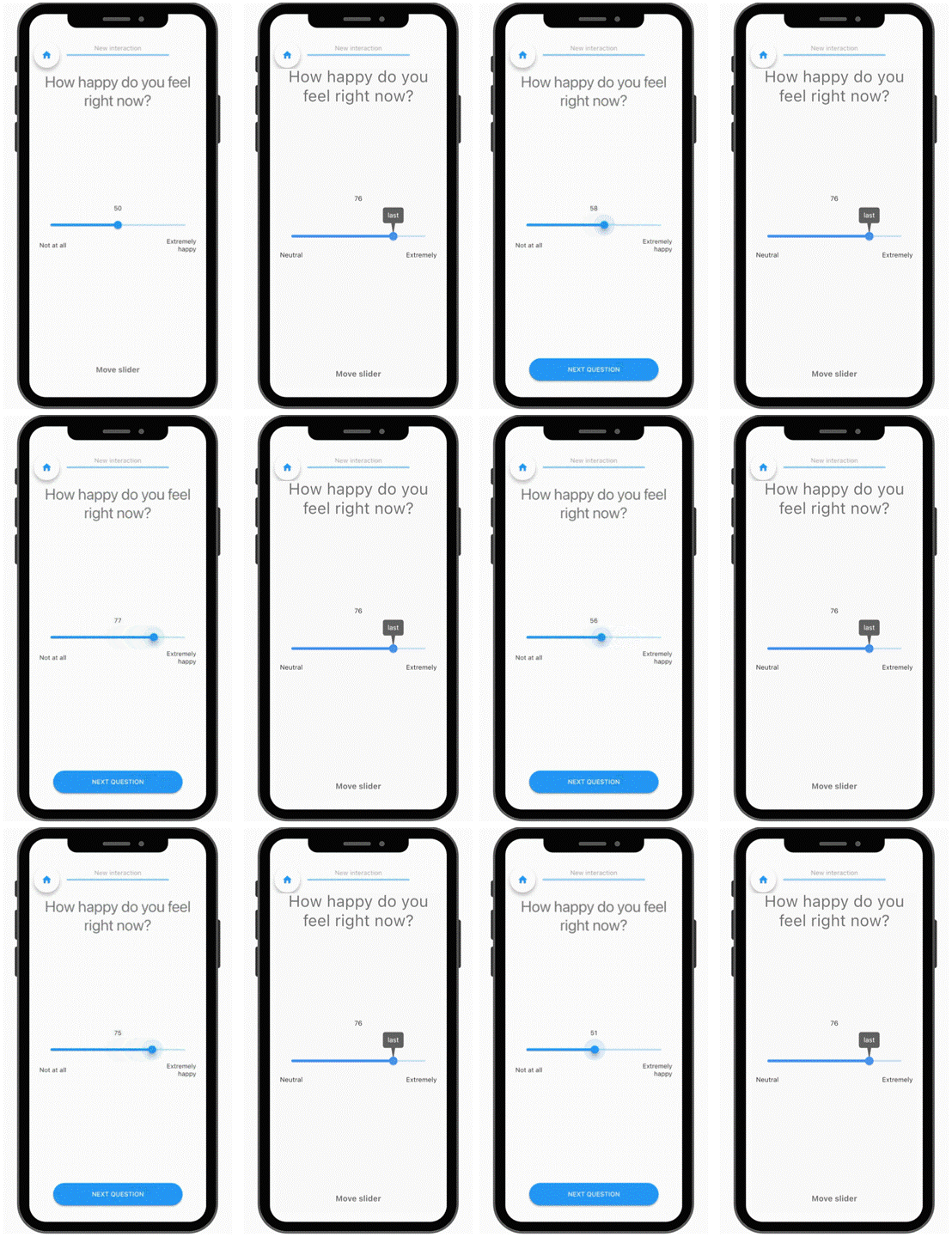
The traditional slider scale (with anchor) in m-Path.
Best for: Capturing isolated momentary emotional intensity in high-frequency ESM / EMA designs with minimal participant burden.
2. Smiley sliders: when emotions need to be visual
For some populations, numbers alone are not ideal. That is where smiley-based sliders come in. This format holds a special place in m-Path's history: it was the very first question type we developed 🥰, and it remains one of the most used today.
Here, the slider is paired with a facial expression that changes as the participant moves the scale, from neutral 😐 to strongly expressive 🤩. The visual cue supports interpretation and further lowers cognitive load.
Think of it like a mood thermometer that shows a face instead of a number. No reading required, less guessing what "67 out of 100" really means.
These formats are especially useful for children, participants with limited reading skills, or cognitive ability. In practice, you can either use our ready-made smiley templates or build your own by linking images to different slider positions, allowing full customization for specific emotions.
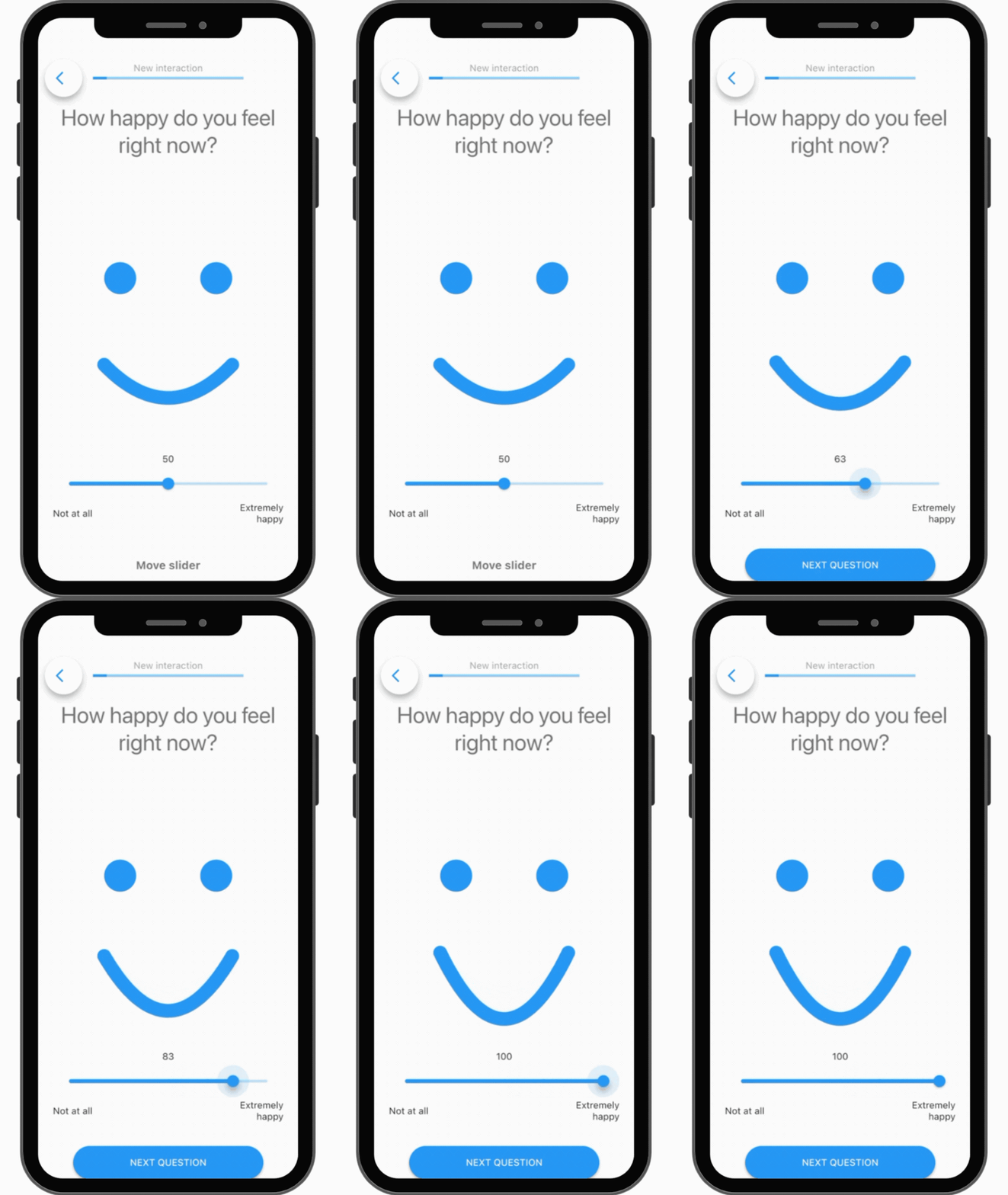
The responsive smiley slider in m-Path.
Best for: Capturing isolated momentary emotional intensity in populations with lower literacy, children, and situations that require fast, intuitive responses.
3. Image choice and follow-up: from recognition to intensity
Sometimes, asking directly about intensity is jumping the gun. Participants may first need to identify which emotion they are experiencing before they can rate how strongly they feel it.
A(n image) multiple choice item lets participants select one or more emotions (such as anger, sadness, or joy). Conditional follow-up questions then probe the intensity of the selected emotion(s) only.
This creates a hybrid approach: first discrete recognition ("Which emotions apply [most]?"), then continuous evaluation ("How intense is this emotion right now?"). The result is a more personalized and response-sensitive measurement flow, without increasing burden for emotions that are not relevant at that moment.
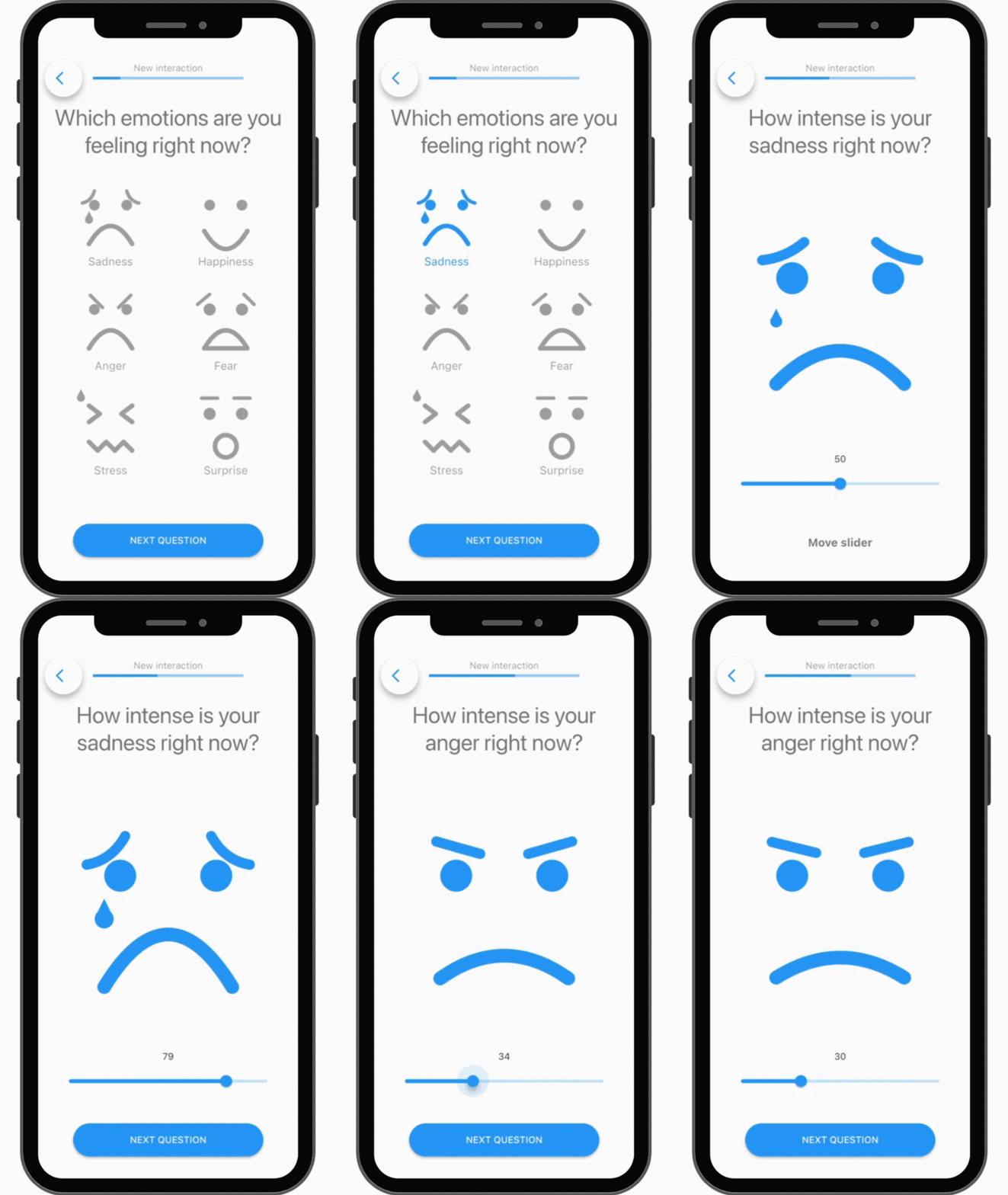
The image multiple choice and subsequent intensity rating in m-Path.
Best for: Contexts where multiple emotions co-occur and are assessed relative to each other, with surveys naturally adapting to individual responses.
If a participant’s “true” momentary emotion level stays constant, their observed rating can still jump several points up or down purely due to measurement noise.
Why we avoid 2D valence-arousal grids
A common alternative in emotion research is the use of a two-dimensional space defined by valence and arousal.
While this approach is theoretically appealing, it often fails in practice.
The key issue lies with the arousal dimension.
Although participants generally understand valence as pleasant versus unpleasant, the concept of arousal, referring to physiological or psychological activation, is much less intuitive for lay people.
What we consistently observe in our own ESM / EMA studies, is that participants:
- rely heavily on the valence dimension
- struggle to meaningfully interpret arousal
- produce data where arousal adds noise rather than insight
As a result, the data often do not reflect how people actually experience their emotions in daily life. For this reason, we avoid this format in m-Path and focus on methods that participants can intuitively understand, because valid data start with interpretations that make sense to the person responding.
You can read more about this issue here.
4. Continuous line items: capturing emotion dynamics between prompts
Most ESM / EMA questions capture snapshots of how someone feels right now. But emotions do not jump from one moment to the next, they evolve.
A continuous line item allows participants to draw their emotional trajectory between two measurement points. Instead of reporting a single value, they sketch peaks, dips, and transitions. Imagine being asked not just "how stressed were you?" but "show me the shape of your stress over the last two hours." That is what this format captures.
This approach surfaces information that traditional momentary items simply miss: emotional volatility, recovery after events, and delayed emotional reactions.
We discussed continuous emotion trajectories in depth in this dedicated blog post.
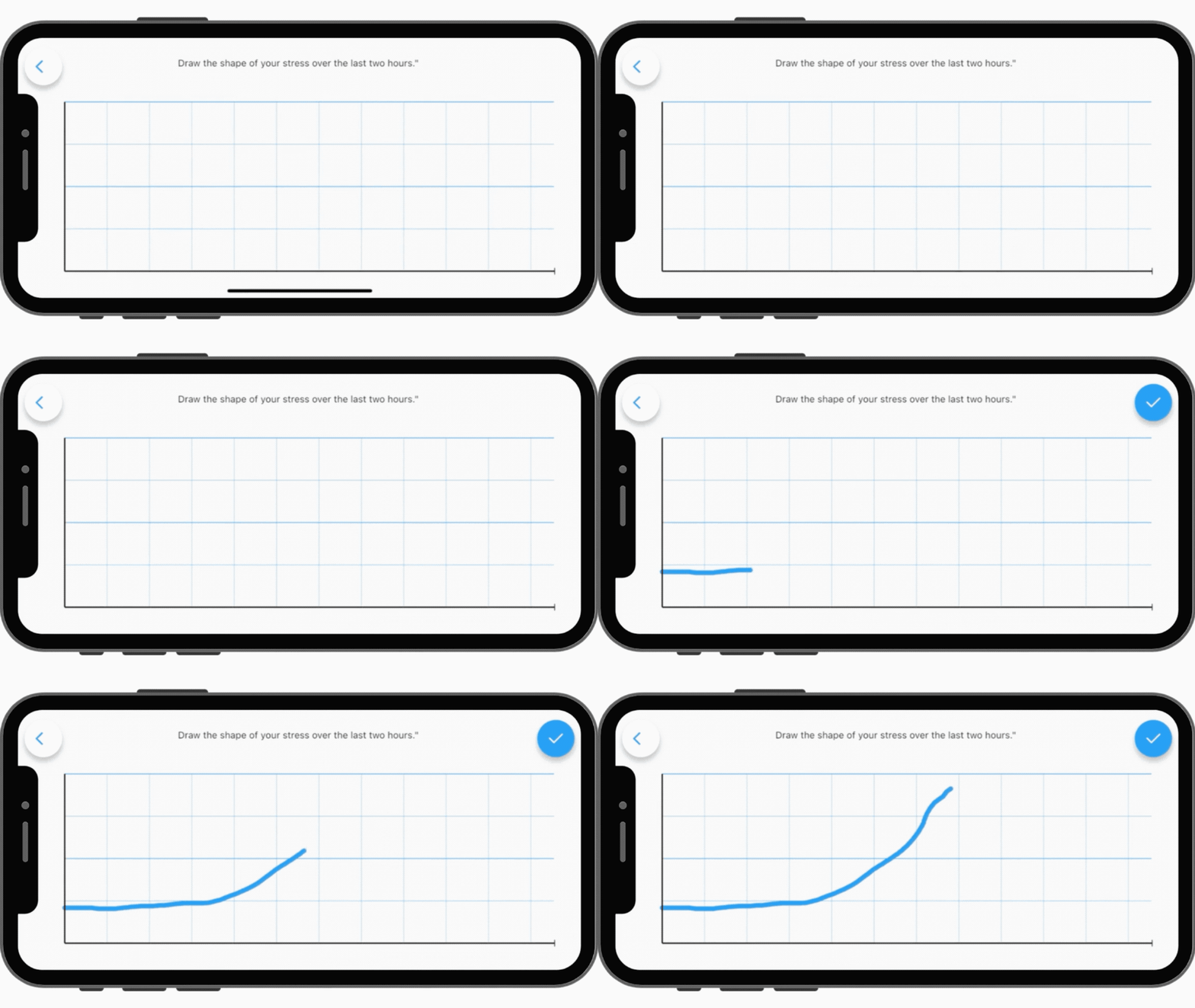
The continuous line item in m-Path.
Best for: Capturing emotional dynamics over time, including emotional reactivity, recovery and affective instability. Ideal when a “full” emotional picture is required.
5. The emotion wheel: capturing complexity in a single interaction
A final method moves beyond single-emotion measurement and acknowledges that emotional experiences are often complex and multifaceted.
An emotion wheel allows participants to simultaneously:
- select multiple emotions
- indicate their intensity
- compare emotions relative to one another
All of this happens within a single, intuitive interface, making it both efficient and expressive.
In daily life, emotions frequently co-occur. For example, someone might feel both anxious and excited before an important event. Traditional unidimensional scales that are serially presented struggle to capture this complexity, whereas the emotion wheel is specifically designed to handle it.
In recent implementations, we have seen that participants can complete these items quickly, while providing richer and more nuanced data compared to simpler formats.
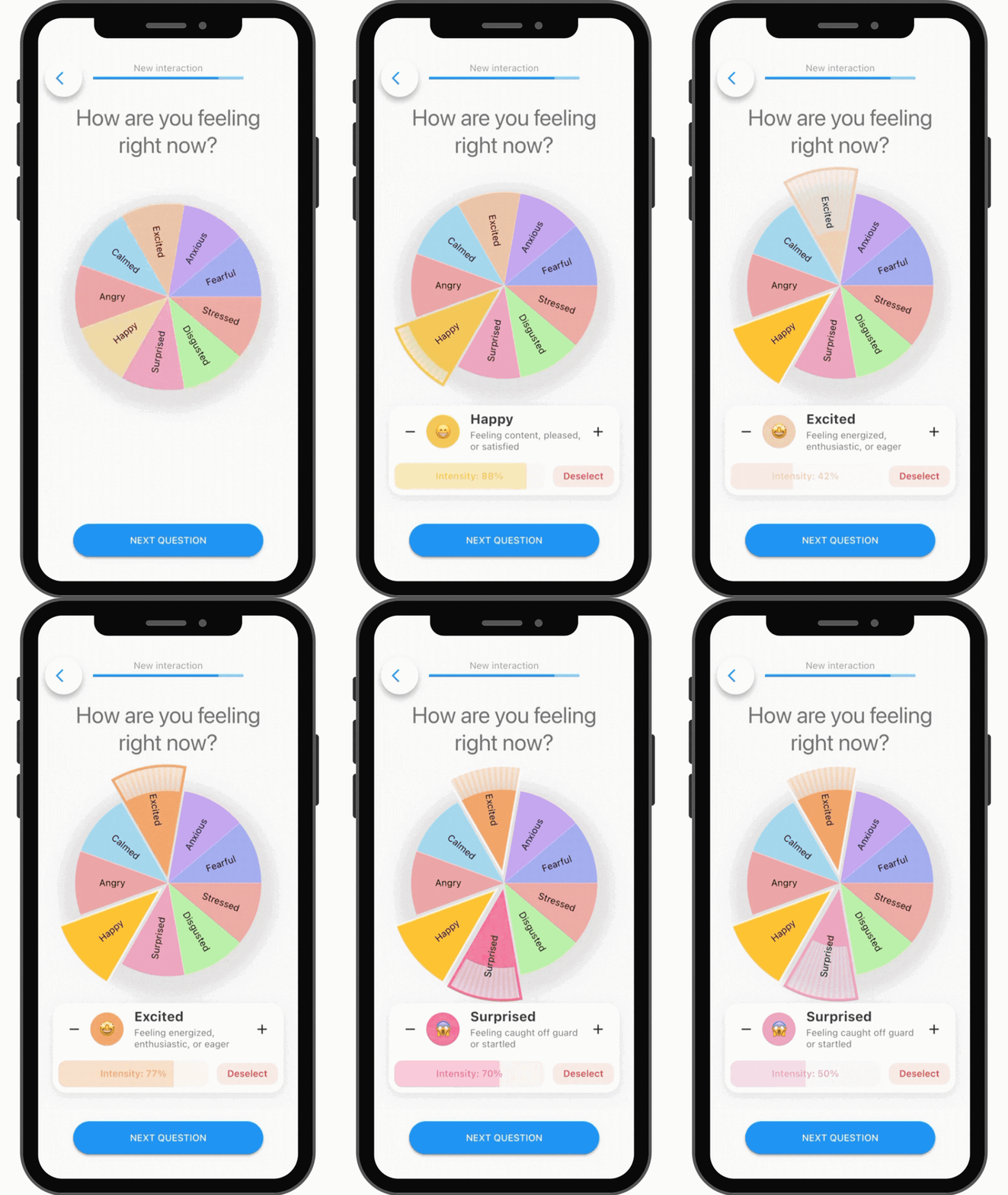
The m-Path emotion wheel.
Best for: Capturing co-occurring (mixed) emotions and complex emotional profiles, balance or concurrent diversity.
Choosing the right method is part of your ESM / EMA study design
There is no universally optimal way to measure emotions in daily life.
Each method captures a different aspect of emotional experience, and each comes with its own trade-offs. The key is to align your measurement approach with the specific goals of your study.
In practice, this means considering:
- what aspect of emotion you want to capture
- who your participants are
- how frequently you will measure
Because ultimately, in EMA / ESM research: The way you ask the question determines the data you will get.
Not sure which format fits your study? Reach out to the m-Path team or check out our dedicated manual pages to see how these question types work in practice.

Dr. Egon Dejonckheere is an Assistant Professor at Tilburg University, affiliated with KU Leuven, specializing in ambulatory assessment and intensive longitudinal research.
His work combines methodological innovation to improve these methods with applications in mental health and emotion dynamics, and includes dozens of smartphone-based studies in daily life.